
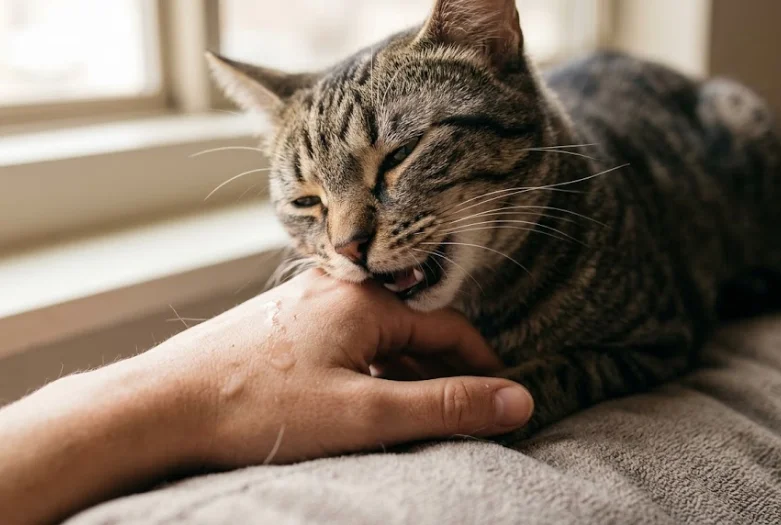
If you wonder why does my cat lick me then bite me, the answer usually involves communication rather than sudden aggression. Your feline may become overstimulated, switch into play mode, or signal that touching should stop. Context and body language can help you tell the difference.
Direct answer: Licking followed by biting usually means your pet became overstimulated, playful, or ready for the interaction to end. Gentle nibbles can also occur during social grooming. Watch the tail, ears, pupils, and body tension to understand what the bite means.
| What you notice | Likely explanation | Best response |
|---|---|---|
| Relaxed licking followed by a gentle nibble | Social grooming or a mild “love bite” | Pause and watch body language |
| Tail twitching before the bite | Petting overstimulation | Stop touching and give space |
| Grabbing, kicking, or chasing hands | Play or hunting behavior | Redirect to an interactive toy |
| Tense posture or flattened ears | Fear, frustration, or discomfort | End the interaction |
| Biting when one area is touched | Possible pain | Arrange a veterinary examination |
| Sudden increase in licking or biting | Stress or medical change | Monitor closely and contact your veterinarian |
Key Takeaways
- Licking often reflects grooming, bonding, attention seeking, or curiosity.
- A following nip frequently signals overstimulation or a request for space.
- Gentle mouthing differs from a forceful defensive bite.
- Tail flicking, tense muscles, and backward ears often appear before biting.
- Hands should not become toys during energetic play.
- Sudden or painful behavioral changes deserve veterinary attention.
Why Does My Cat Lick Me Then Bite Me?
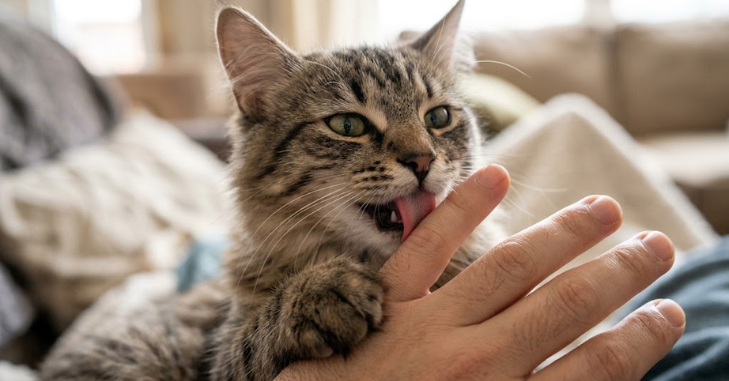
The lick-and-bite sequence can look contradictory because humans often interpret licking as affection. Feline communication can change within seconds as arousal increases. A pleasant interaction can therefore become uncomfortable before you realize anything changed.
Why Does My Cat Lick Me Then Bite Me? Veterinary behavior guidance identifies petting overstimulation as a common explanation for sudden bites during physical contact. Each animal has a different tolerance for repeated touching. Your goal is to notice when your companion approaches that limit.
The behavior can also happen during grooming-style interactions or active play. Some pets gently use their teeth while interacting with trusted companions. The strength of the bite and surrounding body language matter more than the sequence alone.
1. Your Pet Has Become Overstimulated
Repeated petting can become unpleasant even when the interaction started comfortably. A feline may enjoy several strokes before reaching a sensory limit. Biting can then become the fastest way to make the touching stop.
Overstimulation often has warning signs before the teeth appear. You may notice a twitching tail, rippling skin, rotating ears, or increasing muscle tension. Dilated pupils and sudden head movements can also signal rising arousal.
Stop petting when these signals first appear instead of waiting for a bite. Shorter sessions can help you learn your companion’s tolerance. Ending while they remain relaxed can prevent the interaction from escalating.
2. The Nibble Is Part of Social Grooming
Licking is a normal part of feline grooming and social bonding. Animals that live together may groom trusted companions around the head and neck. Your pet may direct a similar social behavior toward you.
Grooming sometimes includes small nibbles that help work through fur or debris. Human skin has no coat, but the inherited behavior can remain. A soft nibble therefore does not automatically mean anger.
Pay attention to pressure and posture before labeling the behavior a “love bite.” A loose body and calm tail suggest a different emotional state from a tense crouch. A hard bite deserves more caution regardless of what happened first.
3. Your Hands Have Become Part of the Game
Young and energetic felines naturally rehearse hunting behaviors during play. These behaviors include stalking, grabbing, biting, and kicking. A moving hand can accidentally become an appealing target.
Hand wrestling can strengthen this habit because it teaches the animal that human skin is suitable prey. The behavior becomes less amusing as adult teeth and claws grow stronger. Interactive toys create a safer outlet for the same instincts.
Use wand toys, rolling toys, or kicker toys instead of fingers. Knosten’s Somali breed guide also discusses how active companions benefit from climbing space and daily enrichment. Regular play can reduce attempts to turn your hands into entertainment.
4. Your Companion Wants the Interaction to Stop
Approaching you does not always mean your pet wants prolonged stroking. They may want warmth, company, food, or a comfortable place to rest. Petting can become unwanted even when they choose to sit beside you.
This distinction explains why a relaxed animal may suddenly turn and nip. The message may simply mean “stop touching me.” Respecting that request can prevent stronger defensive behavior later.
Allow your companion to leave whenever they choose. Avoid holding them in place after warning signs appear. Giving control over physical contact often creates calmer interactions.
5. Excitement or Frustration Has Spilled Into Biting
High arousal can blur the line between affection and rough behavior. Excitement may build during petting, play, feeding routines, or attention seeking. A lick can quickly turn into a grab or nip.
Frustration can produce a similar sequence when the animal expected something different. They may have approached because they wanted play rather than petting. Another nearby stimulus can also raise their level of excitement.
Look at what happened immediately before the behavior. A bird outside, another animal, or an energetic game may explain the sudden change. Reduce stimulation and let your companion settle before interacting again.
6. Stress May Be Changing Their Behavior
Licking can sometimes function as a self-soothing behavior during stressful situations. Household changes, visitors, unfamiliar animals, or reduced stimulation can affect behavior. Excessive grooming may also appear when stress continues.
Occasional licking during relaxed contact is usually less concerning. A sudden increase deserves closer observation, especially alongside hiding or appetite changes. Repeated biting without an obvious trigger also warrants attention.
Provide predictable routines, resting areas, climbing opportunities, and regular interactive play. Household safety also affects stress and wellbeing. Knosten’s guide to roses and feline safety can help owners evaluate common plant hazards.
7. Pain or Medical Discomfort Could Be Involved
Pain can lower an animal’s tolerance for being touched. Dental disease, skin irritation, injuries, or joint discomfort may make ordinary contact unpleasant. Biting may serve as a protective response when a painful area is handled.
Location can provide an important clue. Repeated reactions when you touch the same body area deserve veterinary investigation. Sudden aggression in an older companion should also receive medical attention.
Do not repeatedly test a sensitive area to confirm your suspicion. Record what you noticed and discuss it with your veterinarian. Early evaluation can identify problems that are difficult to see from the outside.
How to Read the Warning Signs Before a Bite
Body language usually gives more information than the lick itself. Watch the entire body rather than focusing only on the mouth. Small changes can warn you before the interaction becomes uncomfortable.
Common warning signs are listed below.
- Rapid tail-tip twitching
- Ears rotating sideways or backward
- Enlarged pupils
- Skin twitching across the back
- A suddenly tense body
- Moving away from your touch
- Growling, hissing, or other tense vocalizations
One signal does not always predict a bite. Several appearing together provide stronger evidence that arousal is rising. Stop touching and allow space when the pattern becomes clear.
What Should You Do When Licking Turns Into Biting?
Avoid punishment, yelling, or hitting after a nip. Punishment can add fear without teaching a safer replacement behavior. Quietly ending the interaction gives a clearer consequence.
Redirect playful biting toward an appropriate toy once the animal has settled. Reward calm interactions that do not involve teeth on skin. Consistent responses help establish predictable boundaries.
Also examine the pattern behind each incident. Note where you were touching, how long the session lasted, and what warning signs appeared. This simple record can reveal a repeatable tolerance threshold.
What If the Bite Breaks Your Skin?
Wash any bite that breaks the skin promptly with soap and running water. Feline puncture wounds can become infected even when they look small. Do not dismiss increasing redness, swelling, warmth, or pain.
The CDC advises seeking medical care for serious wounds and signs of infection. Medical advice may also be appropriate after an unprovoked bite or uncertain rabies exposure. Your healthcare provider can assess tetanus, infection, and other treatment needs.
People with weakened immune systems should be especially cautious about animal bites. Deep punctures also deserve prompt professional assessment. Veterinary behavior questions and human wound care should be handled by the appropriate professionals.
How to Reduce Lick-Then-Bite Episodes
Start by shortening petting sessions and stopping before warning signals appear. Focus on areas your companion seems comfortable having touched. Many individuals prefer the cheeks, head, or chin over prolonged full-body stroking.
Give energetic pets daily opportunities to chase, climb, scratch, and solve simple food puzzles. These activities provide outlets for normal predatory and exploratory behavior. They can also reduce inappropriate attacks on hands and feet.
Routine veterinary care remains important when behavior changes unexpectedly. Owners planning for future healthcare expenses can also review Knosten’s Sphynx ownership cost guide for examples of veterinary budgeting considerations. Preparation makes unexpected health concerns easier to manage.
When Should You Call a Veterinarian?
Arrange a veterinary visit when the behavior appears suddenly or becomes noticeably more intense. Medical evaluation matters more when touching one location consistently triggers a bite. Changes in appetite, movement, grooming, sleep, or social behavior add further reason for concern.
Excessive licking can also accompany skin disease, pain, or stress-related problems. Bald patches, redness, sores, or persistent self-grooming should not be ignored. Cornell’s feline health guidance recommends investigating abnormal excessive grooming rather than assuming it is behavioral.
Behavioral support may help after medical causes have been ruled out. Your veterinarian can recommend a qualified behavior professional when needed. Persistent biting is easier to address when the underlying trigger is identified first.
The Bottom Line
The lick-then-bite sequence usually makes more sense once you watch what happens before it. Overstimulation, play, grooming, frustration, and requests for space can all produce similar behavior. Body language helps separate a harmless nibble from a warning.
Learn your companion’s early signals and end contact before tension builds. Use toys rather than hands for active play, and respect requests for space. Seek veterinary help when the pattern changes suddenly or suggests pain.
Understanding these signals can make daily interactions safer for both of you. It also gives your pet more control over physical contact. That combination supports a calmer and more trusting relationship.
Frequently Asked Questions
Why does my cat lick me then bite me gently?
A gentle lick followed by a soft nibble can occur during social grooming, play, or mild overstimulation. Relaxed posture usually suggests the interaction is not defensive. Stop if pressure increases or their body begins looking tense.
Does licking mean my pet loves me?
Licking can be associated with bonding and social grooming between familiar individuals. It can also seek attention or reflect interest in scents on your skin. You therefore need context before treating every lick as affection.
Why does the biting happen while I am petting them?
Repeated touch can eventually cross an individual’s comfort threshold. Warning signs may include tail flicking, backward ears, skin twitching, or sudden tension. Ending the session at those early signals can prevent many bites.
Should I let my pet lick my face?
It is safer to prevent licking around your eyes, mouth, and broken skin. Saliva can carry bacteria, even when an animal appears healthy. Also prevent licking after applying creams, medications, or topical products that could be harmful if swallowed.
Is a “love bite” the same as aggression?
Not necessarily, because gentle mouthing can occur during bonding or play. Forceful biting with defensive body language has a different meaning and carries greater injury risk. Judge the entire interaction rather than relying on the nickname.
When is biting a medical concern?
Seek veterinary advice when biting begins suddenly, becomes severe, or happens when a specific area is touched. Pain and illness can reduce tolerance for handling. Other changes in movement, appetite, grooming, or behavior make an examination more important.