
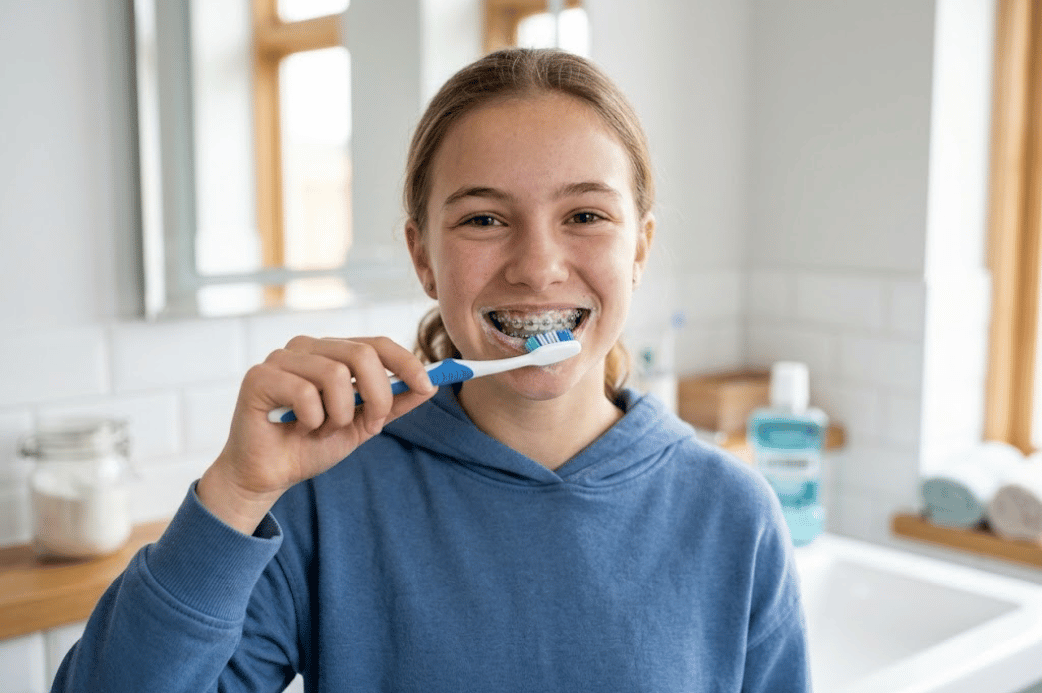
Finding the best manual toothbrush for braces gets easier once you know which features matter. Soft bristles help protect gums, while compact heads make brackets easier to reach. V-shaped or angled bristles can also clean more closely around wires and orthodontic hardware.
Quick answer: The GUM Orthodontic Toothbrush is our top overall pick for most braces wearers. Its soft V-trim bristles are shaped to clean around brackets, wires, buttons, and ligatures. The Curaprox CS Ortho is a stronger premium choice if you prefer ultra-soft, densely packed bristles.
| Pick | Best for | Bristle design | Head | Typical U.S. price* |
|---|---|---|---|---|
| GUM Orthodontic Toothbrush | Best overall | Soft V-trim | Compact | About \$3 at some U.S. dental retailers |
| Curaprox CS Ortho | Premium pick | 5,460 ultra-fine V-trim filaments | Compact | \$10 |
| Y-Kelin V-Shaped Orthodontic Toothbrush | Value multi-pack | Soft V-shaped bristles | Small | Varies by retailer |
| TePe Universal Care | Hard-to-reach areas | Soft precision bristles | Slim, angled | \$5.99 |
| Standard soft compact brush | Easy local replacement | Soft multilevel or angled | Small | Varies |
*Prices and availability can change. Check the current seller listing before buying.
Our Verdict: Which Manual Brush Should You Buy?
The GUM Orthodontic Toothbrush offers the best balance for most people wearing traditional braces. Its V-trim center follows the shape of brackets while longer bristles reach surrounding tooth surfaces. The compact head and non-slip handle also make controlled brushing easier.
The Curaprox CS Ortho is our premium alternative for sensitive gums or people who prefer an ultra-soft feel. It uses 5,460 fine filaments and a center groove designed around orthodontic brackets. Its current U.S. manufacturer price is \$10.
TePe Universal Care fills a different role because its angled neck targets difficult surfaces. It can be useful behind teeth, around lingual braces, and beside other hard-to-reach areas. Many people may prefer it as a supporting brush rather than their only everyday brush.
Best Manual Toothbrush for Braces: Our Top 5 Picks
1. GUM Orthodontic Toothbrush: Best Overall
GUM designed its orthodontic brush specifically for fixed dental appliances. Its soft, multi-level V-trim bristles fit around brackets, arch wires, buttons, and ligatures. The compact head also helps you reach crowded areas without using excessive pressure.
The handle has a non-slip grip for better control around sensitive hardware. That feature becomes useful when your mouth feels tender after an adjustment. The design remains simple enough for teenagers and adults to use every day.
A U.S. dental retailer recently listed the GUM 124 brush for \$2.99. Manufacturer and retailer prices can differ, so treat that figure as a current reference. Its low replacement cost is another reason it earns our top position.
Pros
* V-trim is designed for orthodontic appliances. * Soft bristles are suitable for gentle cleaning. * Compact head improves access. * Non-slip grip helps control. * Inexpensive compared with many specialty brushes.
Cons
* No timer or pressure feedback. * Retail availability can vary. * Bristles may wear faster around fixed hardware.
2. Curaprox CS Ortho: Best Premium Pick
The Curaprox CS Ortho uses 5,460 ultra-fine filaments packed into a compact head. The middle section is cut shorter, creating a groove that sits around brackets. This shape lets the surrounding filaments clean tooth surfaces and the gumline.
Curaprox lists each filament at 0.10 millimeters in diameter. The company also recommends gentle circular brushing at about a 45-degree angle near the gumline. That combination suits people who dislike a stiff or scratchy brush.
The brush currently sells for \$10 through the U.S. Curaprox website. That price is higher than the GUM option, but the filament density is unusual. Choose it when softness and precise bracket cleaning matter more than minimizing cost.
Pros
* 5,460 ultra-fine filaments. * Center groove shaped for brackets. * Compact head. * Soft feel around tender gums. * Designed specifically for braces.
Cons
* Costs more than basic orthodontic brushes. * No electronic brushing feedback. * Color selection may vary.
3. Y-Kelin V-Shaped Orthodontic Toothbrush: Best Value Multi-Pack
Y-Kelin is often recommended in current comparison guides for its clear orthodontic design. Its bristles use a V-shaped profile that leaves more space around raised brackets. A small head can also make rear teeth easier to reach.
This design appeals to families who want several brushes on hand. Keeping replacements nearby matters because braces can make bristles fray sooner. A multi-pack can also be useful for school, work, or travel.
Availability and package sizes vary across U.S. sellers. Compare the cost per brush instead of focusing only on the package price. Make sure the listing specifies soft bristles and the orthodontic V-cut design.
Pros
* Orthodontic V-shaped bristles. * Small brush head. * Often sold in multi-packs. * Convenient for travel or backup use.
Cons
* Seller quality can vary. * Fewer manufacturer details than major dental brands. * Exact pricing changes across retailers.
4. TePe Universal Care: Best for Hard-to-Reach Areas
TePe Universal Care uses a slim head and sharply angled neck to reach awkward surfaces. The manufacturer specifically lists lingual braces, retainers, implants, and retroclined teeth among its uses. Its U.S. price is currently \$5.99.
The unusual head angle makes this brush especially helpful behind front teeth and around rear surfaces. Those spots can be difficult to reach with a normal straight-neck brush. It can also provide more controlled cleaning beside orthodontic attachments.
This model does not use the classic V-groove found on our top two picks. For standard front-mounted braces, some users may prefer it as a precision companion brush. People with lingual braces may find its angled shape especially useful.
Pros
* Angled neck improves difficult access. * Slim head. * Suitable for lingual orthodontic work. * Current U.S. price is modest. * Useful around retainers and attachments.
Cons
* Not a traditional V-trim orthodontic design. * Shape may feel unfamiliar initially. * May work best as a supplemental brush.
5. Soft Compact Multilevel Toothbrush: Best Easy-to-Find Alternative
A specialized orthodontic model is helpful, but it is not your only workable option. The American Dental Association recommends soft bristles for routine brushing. It also notes that multilevel or angled designs can remove plaque better than conventional flat trims.
Choose a compact head that comfortably reaches your back molars. Avoid hard bristles because aggressive brushing can irritate the gumline. Gentle pressure also helps bristles work around hardware instead of bending away from it.
This option makes sense when an orthodontic brush is unavailable locally. It is also practical if you need an emergency replacement while traveling. The right technique still matters as much as the logo on the handle.
What Makes a Good Toothbrush for Braces?
Start with soft bristles. The ADA recommends soft bristles because they clean effectively while reducing the risk of gum abrasion. Tender gums can become especially noticeable after orthodontic adjustments.
Head size also matters because brackets reduce the usable space inside your mouth. A compact brush can move around back teeth and crowded areas more easily. Oversized heads may make precise cleaning behind wires frustrating.
Bristle shape is another useful difference. Research on manual brushes suggests angled and multilevel configurations can outperform simple flat trims for plaque removal. Evidence comparing specific orthodontic designs remains limited, so technique should stay central.
A comfortable handle can improve control during the two minutes you spend brushing. Rubberized or shaped grips can help when maneuvering around brackets. The brush should feel stable without encouraging heavy pressure.
V-Shaped Bristles vs. Regular Soft Bristles
| Feature | V-shaped orthodontic bristles | Regular soft bristles |
|---|---|---|
| Bracket access | Designed to fit around brackets | Depends more on brushing angle |
| Gumline cleaning | Longer outer rows can reach surrounding surfaces | Effective with correct technique |
| Availability | More specialized | Widely available |
| Cost | Often slightly higher | Many budget choices |
| Best use | Fixed braces | General brushing or backup use |
A V-cut is useful because brackets rise above the natural tooth surface. Shorter center bristles can pass over the bracket, while longer outer bristles contact nearby enamel. This geometry can make correct positioning easier.
A standard soft brush can still clean effectively with careful technique. The ADA states that manual and powered toothbrushes can both be effective. Consistent brushing remains more important than buying an expensive brush you dislike using.
How to Brush Around Braces With a Manual Toothbrush
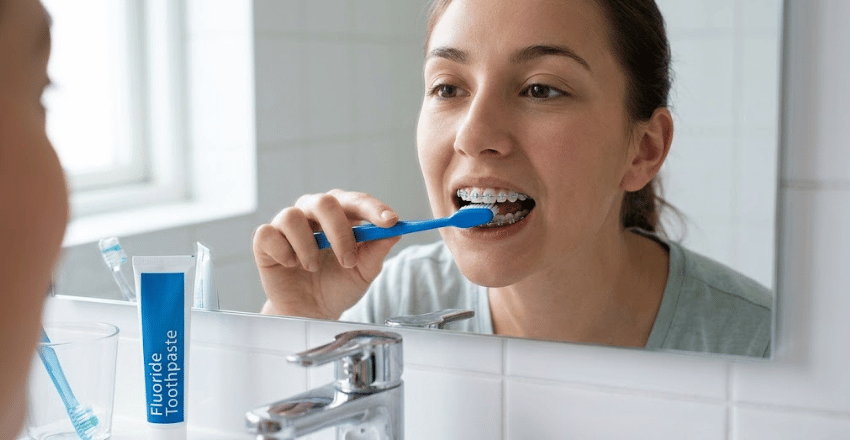
If you are still preparing for treatment, our guide to things you should know before getting braces covers what to expect. Good technique prevents a specialized brush from becoming an expensive shortcut. Spend about two minutes brushing twice each day with fluoride toothpaste. Give extra attention to the areas directly above and below each bracket.
1. Rinse away loose food first. Swish with water before brushing if food is trapped around the wires. 2. Start at the gumline. Angle the bristles gently toward the gumline and use short movements. 3. Clean above the brackets. Tilt the head downward so bristles contact the upper bracket edges. 4. Clean below the brackets. Reverse the angle and brush beneath the brackets and wire. 5. Brush the bracket faces. Use gentle strokes over each bracket without pressing hard. 6. Clean chewing and inner surfaces. Do not spend the full session only on visible orthodontic hardware. 7. Check difficult spaces. Use an interdental brush where a normal head cannot reach beneath the archwire.
Interdental cleaning deserves its own place in your routine. A conventional toothbrush cannot reach every narrow space between wires and teeth. Your orthodontist can help select an interdental brush size that fits without forcing it.
How Often Should You Replace the Brush?
The ADA generally recommends replacing a toothbrush every three to four months. Replace it sooner when the bristles become matted or visibly frayed. Fixed brackets may accelerate wear because bristles repeatedly contact metal edges.
Inspect your brush instead of relying only on the calendar. A flattened V-trim can lose the shape that made the brush useful around appliances. Keeping a spare brush available makes timely replacement easier.
You should also rinse the head well after each use. Store it upright so it can air-dry between brushing sessions. Avoid sharing brushes with anyone else in your household.
Manual vs. Electric Toothbrushes With Braces
Both manual and powered brushes can remove plaque when used correctly. Research specifically involving fixed orthodontic appliances has not always shown a clear advantage for powered brushes. Preference, technique, and consistency remain important.
A manual option costs less and needs no charger or replacement head system. It is easy to keep in a school bag, travel kit, or workplace drawer. Specialty V-trim heads also give braces wearers a shape designed around brackets.
An electric model can still make sense for people who struggle with brushing technique. Timers and pressure sensors may encourage more consistent habits. Ask your orthodontist if dexterity or plaque buildup remains a problem despite careful brushing.
Frequently Asked Questions
What is the best manual toothbrush for braces?
For most people, the GUM Orthodontic Toothbrush is our top choice because it combines soft V-trim bristles with a compact head. Curaprox CS Ortho is our premium alternative for people who want densely packed ultra-fine filaments. Both designs are made specifically for cleaning around orthodontic hardware.
Should braces wearers use soft or medium bristles?
Soft bristles are the safer default for routine brushing. The ADA recommends soft bristles and gentle pressure to reduce the risk of gum injury. Your dentist or orthodontist can recommend another option for unusual clinical needs.
Are V-shaped toothbrushes better for braces?
V-shaped brushes are designed to fit around raised brackets and wires. That shape can make it easier to place bristles against nearby enamel. Clinical evidence comparing every orthodontic design remains limited, so brushing technique still matters.
Can a normal toothbrush clean braces?
Yes, a normal soft-bristled brush can work when you clean carefully around every bracket. A compact, angled, or multilevel design may improve access compared with a large flat head. Specialized orthodontic brushes mainly make positioning easier.
Do I still need interdental brushes?
Many braces wearers benefit from them because ordinary bristles cannot reach every space beneath an archwire. Interdental brushes can target gaps beside brackets and between teeth. Ask your orthodontic team which size fits your appliance.
How long should I brush with braces?
Aim for two minutes twice daily unless your dental professional gives different instructions. Spend enough time on the gumline, bracket edges, chewing surfaces, and inner tooth surfaces. Rushing one area often leaves plaque around another.
Which Brush Should You Choose?
Start with the GUM Orthodontic Toothbrush if you want a practical, low-cost choice designed around fixed braces. Choose Curaprox CS Ortho when extra-soft, densely packed filaments are worth the higher price. TePe Universal Care makes more sense for lingual braces or difficult rear surfaces.
The brush you use consistently will usually serve you better than a complicated option you avoid. Pair good brushing with interdental cleaning and regular orthodontic appointments. Ask your orthodontist for personalized advice if plaque, bleeding, or persistent soreness continues.
More Health Reading From Knosten
Knosten also publishes broader healthcare articles while more oral-care guides are added. If you want to see how clinics handle communication, read how to respond to patient feedback in healthcare or learn how healthcare contact center services enhance patient satisfaction. These pages cover different healthcare subjects rather than orthodontic treatment specifically.