
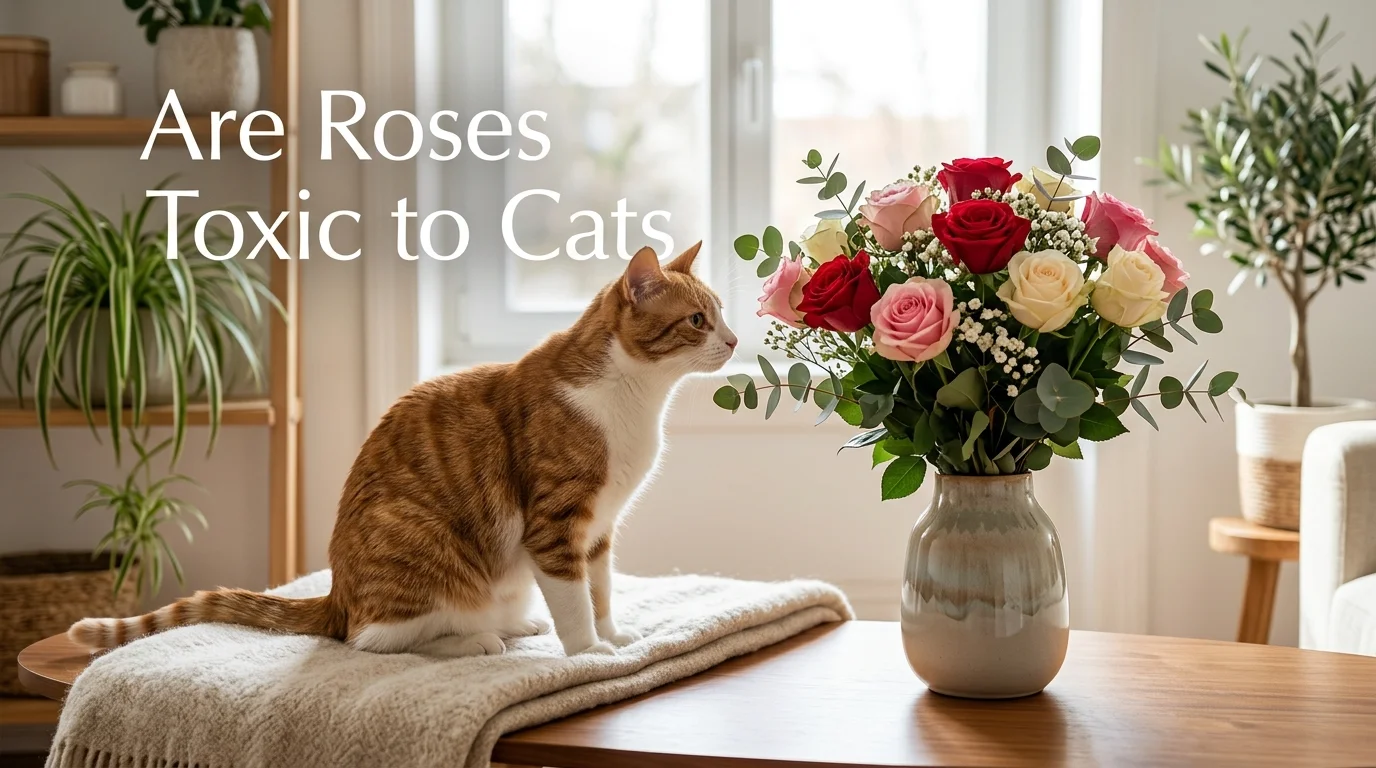
If you’re wondering, Are Roses Toxic to Cats, the reassuring answer is no, as long as the plant is a true rose from the genus Rosa. The ASPCA classifies these plants as non-toxic to cats, dogs, and horses. Still, thorns, garden chemicals, floral preservatives, and similarly named plants can create risks that every cat owner should know.
| Situation | Risk to a cat | What to do |
|---|---|---|
| True \Rosa\ flower or petal | Not considered toxic | Monitor after a small nibble |
| Leaves or other plant material | Possible stomach upset | Watch for vomiting, diarrhea, or poor appetite |
| Thorny stem | Physical injury risk | Check the mouth, paws, eyes, and skin |
| Pesticide-treated plant | Chemical exposure may be dangerous | Contact a veterinarian if exposure is suspected |
| Bouquet water or flower food | Safety depends on ingredients | Prevent drinking and seek advice after exposure |
| Plant with “rose” in its common name | May be a different, toxic species | Check the scientific name before assuming it is safe |
True rose plants in the genus Rosa are not toxic to cats. A small nibble of a petal or leaf may cause mild stomach upset, but bigger concerns include thorns, chemicals, and unsafe plants in mixed bouquets. If the plant identity is uncertain, contact your veterinarian or a pet poison service.
Are Roses Toxic to Cats? The Direct Answer
The ASPCA Animal Poison Control plant database entry for Rose records Rosa species in the Rosaceae family as non-toxic to cats, dogs, and horses. That includes the true rose plant itself rather than every plant carrying “rose” in its common name. PetMD also identifies the familiar flower as pet-safe while warning owners about hazards surrounding the plant.
Non-toxic does not mean your cat should use a bouquet as a snack. Eating plant material may still irritate the digestive system and lead to vomiting, diarrhea, or reduced appetite. A small amount of plain petal is usually less concerning than exposure involving a thorn, chemical treatment, or unidentified flower.
Which Parts of a Rose Can Be a Problem?
Petals and leaves
Plain petals do not contain a known feline toxin, and the same non-toxic classification applies to the true plant. A curious cat may still develop digestive discomfort after chewing leaves or eating a larger quantity of plant material. Keep an eye on your pet afterward, especially if vomiting or loss of appetite develops.
It is also worth checking what else was included in a bouquet before deciding that an exposure is harmless. Florists commonly combine several species, and one unsafe flower can change the situation completely. If you cannot identify every plant, take a photo or keep the bouquet label available for your veterinarian.
Thorns and stems
A thorn creates a mechanical injury rather than poisoning. Sharp stems can scratch a cat’s gums, tongue, paws, skin, or eyes, and swallowed thorns may injure the digestive tract. Cats that rub against plants can also develop small punctures hidden beneath their fur.
Look for bleeding, pawing at the mouth, squinting, limping, swelling, or unusual sensitivity after contact with a thorny stem. A visible superficial scratch may be minor, but eye injuries and swallowed thorns deserve prompt veterinary assessment. Removing thorns from cut flowers also reduces an avoidable household hazard.
Pesticides, flower food, and vase water
The plant may be non-toxic while something applied to it is not. Pesticides, insecticides, fertilizers, and bouquet additives can contain ingredients that require a different response from simple plant ingestion. The FDA also lists insecticides, pesticides, lawn fertilizers, and weed killers among potentially dangerous household and outdoor exposures for pets.
Do not let your cat drink from a flower vase, especially when preservatives or unknown products have been added to the water. Gardeners should also read pesticide labels and follow pet-safety directions before allowing animals into treated areas. For more gardening content, Knosten’s guide to extending your growing season covers practical ways to manage plants and growing conditions around the home.
What Should You Do If Your Cat Ate a Rose?

First, work out what your cat contacted and whether it was definitely a true rose. A few plain petals present a different level of concern from a thorny stem, pesticide-treated plant, or mixed bouquet. Keep any plant tag, chemical container, florist label, or photo available because accurate identification helps a veterinarian assess the risk.
- Move the plant away. Prevent your cat from eating or chewing any more material.
- Check for injuries. Look at the mouth, paws, skin, and eyes for scratches or embedded thorns.
- Identify possible chemicals. Check for pesticide use, flower food, fertilizers, or additives in vase water.
- Watch for symptoms. Vomiting, diarrhea, drooling, weakness, tremors, breathing trouble, or unusual behavior deserve attention.
- Call for professional advice when needed. Contact your veterinarian if the plant is unknown, a thorn was swallowed, chemicals were involved, or symptoms develop.
Do not induce vomiting or give a homemade antidote unless a veterinarian or poison professional specifically instructs you to do so. Pet Poison Helpline advises removing the animal from the exposure and seeking professional guidance rather than attempting home treatment. In the United States, Pet Poison Helpline is available at 855-764-7661, while the ASPCA Animal Poison Control Center can be reached at 888-426-4435; consultation fees may apply.
“False Roses” That Can Be Toxic to Cats
A common plant name is not enough to establish safety. Several unrelated plants contain “rose” in their names even though they do not belong to the Rosa genus. Checking the scientific name is one of the simplest ways to avoid confusing a harmless flower with a toxic species.
| Common name | Scientific name | ASPCA status for cats | Possible effects |
|---|---|---|---|
| Desert Rose | \Adenium obesum\ | Toxic | Vomiting, diarrhea, abnormal heartbeat, potentially severe poisoning |
| Christmas/Easter/Lenten Rose | \Helleborus niger\ | Toxic | Drooling, abdominal pain, diarrhea, depression |
| Moss Rose | \Portulaca oleracea\ | Toxic | Salivation, tremors, rare kidney problems |
| Rosebay/Azalea | \Rhododendron\ spp. | Toxic | Vomiting, weakness, cardiovascular and neurologic effects |
| Primrose | \Primula vulgaris\ | Toxic | Mild vomiting |
The differences are medically meaningful. ASPCA identifies Desert Rose as containing cardiac glycosides, while Rosebay or Rhododendron contains grayanotoxins and can cause serious illness. Christmas Rose is also unrelated to a true garden rose and is classified as toxic to cats.
For pet owners who enjoy plants outdoors, keeping both botanical identity and pet access in mind is useful. Knosten’s broader Home Improvement section includes gardening and outdoor-property topics that can help you plan household spaces more carefully. Plant labels are worth keeping whenever a pet regularly explores those areas.
Be Especially Careful With Lilies in Mixed Bouquets
True lilies and daylilies present a much more serious risk to cats than a true rose does. The U.S. Food and Drug Administration’s guidance on lilies and cats warns that stems, leaves, flowers, pollen, and even vase water from certain lilies can be dangerous, with exposure capable of causing acute kidney failure. This makes identification especially important when a rose arrives as part of a mixed floral arrangement.
If your bouquet contains an Easter, Asiatic, Tiger, Stargazer, Oriental, or other true lily, do not treat the situation like a harmless petal nibble. Even small exposures can warrant immediate veterinary attention, and waiting for obvious illness can lose valuable treatment time. The safest approach in a cat household is to keep true lilies out of the home entirely.
How to Keep Bouquets and Garden Plants Safer Around Cats
Prevention does not require removing every safe flower from your home. You can reduce risk by choosing identified pet-safe species, removing thorny stems from reach, and keeping floral chemicals away from food and water areas. Cats that regularly chew greenery may also need plants placed in rooms or locations they cannot access.
- Confirm the scientific name before bringing an unfamiliar plant home.
- Keep mixed bouquets away from cats until every flower has been identified.
- Remove or securely contain sharp thorny stems.
- Prevent access to vase water and packets of flower preservative.
- Store pesticides and fertilizers in closed containers.
- Follow product-label re-entry instructions after treating outdoor plants.
- Call a veterinarian promptly after an unknown or potentially toxic exposure.
You can also browse Knosten’s Pets section for additional animal-care topics. Pet safety is easiest when everyone in the household knows which plants, chemicals, and foods need to stay out of reach. A quick check before buying a bouquet can prevent a stressful emergency later.
Frequently Asked Questions
Are roses toxic to cats if they eat the petals?
True Rosa petals are not classified as toxic to cats. Eating a small amount can still upset the stomach because plant material is not a normal part of a cat’s diet. Contact a veterinarian if vomiting continues, other symptoms appear, or you cannot confirm the flower’s identity.
Are miniature, spray, or tea rose varieties safe?
The important factor is whether the flower is a genuine member of the Rosa genus. The ASPCA lists Rosa species as non-toxic rather than singling out one familiar garden variety. Still, chemical treatments and thorns can create risks even when the underlying plant is considered non-toxic.
Can my cat drink water from a rose vase?
It is better to prevent access to vase water. The water can contain floral preservatives, residues, or material from other plants in a mixed bouquet, so its safety is not determined by the main flower alone. Replace spills promptly and give your cat fresh drinking water in its normal bowl instead.
When should I call a veterinarian?
Call promptly if your cat swallowed a thorn, contacted a pesticide, ate an unknown plant, or shows concerning symptoms after exposure. You should also seek urgent advice if a mixed bouquet contained a true lily or daylily. For suspected poisoning, professional guidance is safer than inducing vomiting or trying a home remedy.
The Bottom Line for Cat Owners
A true rose is one of the more reassuring flowers to have around a cat because Rosa species are not classified as toxic. The practical risks come from sharp thorns, chemical treatments, bouquet additives, digestive irritation, and unrelated plants that share a similar common name. Knowing those distinctions lets you respond calmly while still taking genuine hazards seriously.
Keep the plant label when possible, check mixed bouquets carefully, and contact a veterinarian when the exposure involves an unknown species or concerning symptoms. For suspected poisoning in the U.S., the ASPCA Animal Poison Control Center and Pet Poison Helpline are established resources for immediate guidance. With a few simple precautions, you can enjoy flowers without treating every curious sniff as an emergency.