
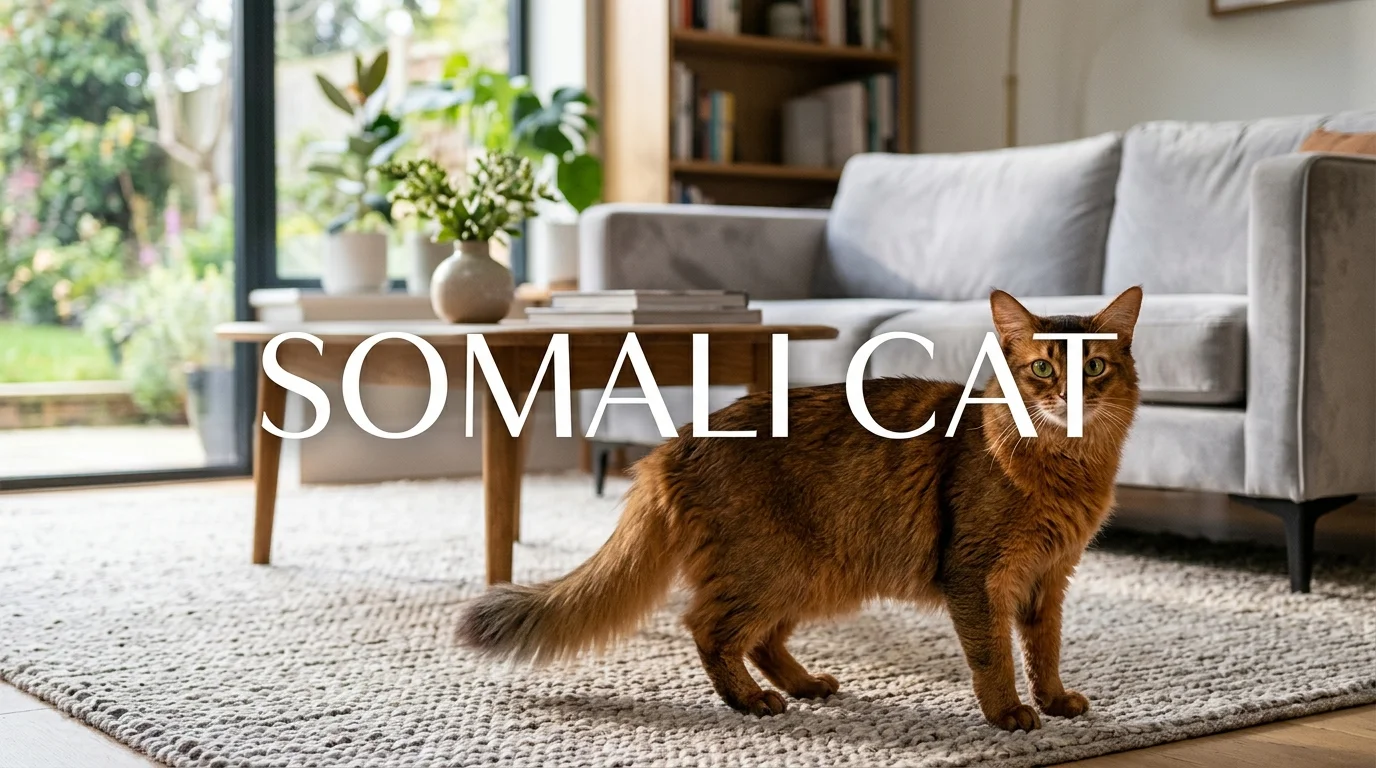
The Somali cat is a medium-sized, athletic companion with a silky coat and plumed tail. It is the longhaired relative of the Abyssinian and shares its curious, active nature. U.S. owners should expect a social cat that needs daily play, climbing space, and regular interaction.
Somalis are affectionate, intelligent, and energetic cats that often stay involved in household activity. Their coat looks demanding, yet weekly combing is usually enough for routine care. The breed suits people who can provide daily play, vertical space, companionship, and veterinary screening for known inherited conditions.
| Trait | Typical profile |
|---|---|
| Size | Medium, athletic build |
| Weight | About 6–12 pounds, depending on sex and source |
| Life expectancy | Often around 11–16 years; registry ranges vary |
| Coat | Semi-long, silky, ticked coat with a plumed tail |
| Grooming | Weekly combing is usually sufficient |
| Energy | High; daily play and climbing opportunities help |
| Hypoallergenic | No |
Breed references differ slightly on size and lifespan, so ranges are more useful than one fixed number. PetMD lists 6–10 pounds and 11–16 years for many adults. TICA gives a broader life expectancy and describes females as smaller than males.
Key takeaways: These cats combine an easy-care coat with unusually high activity and curiosity. They need climbing space, play, and regular interaction more than intensive grooming. Prospective owners should also ask breeders about genetic screening for known inherited conditions.
Somali Cat at a Glance
The breed developed from longhaired kittens appearing in Abyssinian lines. It did not originate in the modern nation of Somalia, despite the name. TICA describes it as the longhaired cousin of the Abyssinian, while CFA recognizes the same close relationship.
Its most recognizable features are a ticked coat, large ears, almond-shaped eyes, and a full tail. Common U.S. registry colors include ruddy, red or cinnamon, blue, and fawn. Some registries also recognize silver or additional color variations.
Temperament and Personality
These cats are typically playful, observant, and highly interested in their surroundings. They often follow household activity instead of spending long hours alone. TICA and CFA both describe them as affectionate, interactive, and energetic companions.
That curiosity can become mischief when the home offers too little stimulation. Puzzle toys, wand play, shelves, and tall cat trees can give their energy a useful outlet. Short daily training sessions may also appeal to a cat that enjoys learning routines.
Appearance, Size, and Lifespan
Adults are lean and muscular rather than bulky, with a balanced medium frame. U.S. sources commonly place adult weight around 6–12 pounds, although individual cats vary. PetMD reports a typical height of about 7–11 inches.
Life expectancy also varies by source and individual health history. PetMD gives an expected range of 11–16 years, while TICA lists a broader 10–19+ years. Preventive veterinary care, nutrition, indoor safety, and genetics all influence an individual cat’s lifespan.
Grooming, Shedding, and Coat Care
The coat looks luxurious, but it usually does not require Persian-level maintenance. CFA recommends weekly combing to remove dead hair and control shedding. TICA also notes that the soft coat rarely mats or tangles under normal conditions.
Use a metal comb or gentle brush that reaches through the longer coat without pulling. Check behind the ears, under the front legs, and around the hindquarters for tangles. For household plant safety, Knosten’s rose safety guide for cat owners covers several common indoor hazards.
Exercise and Enrichment Needs
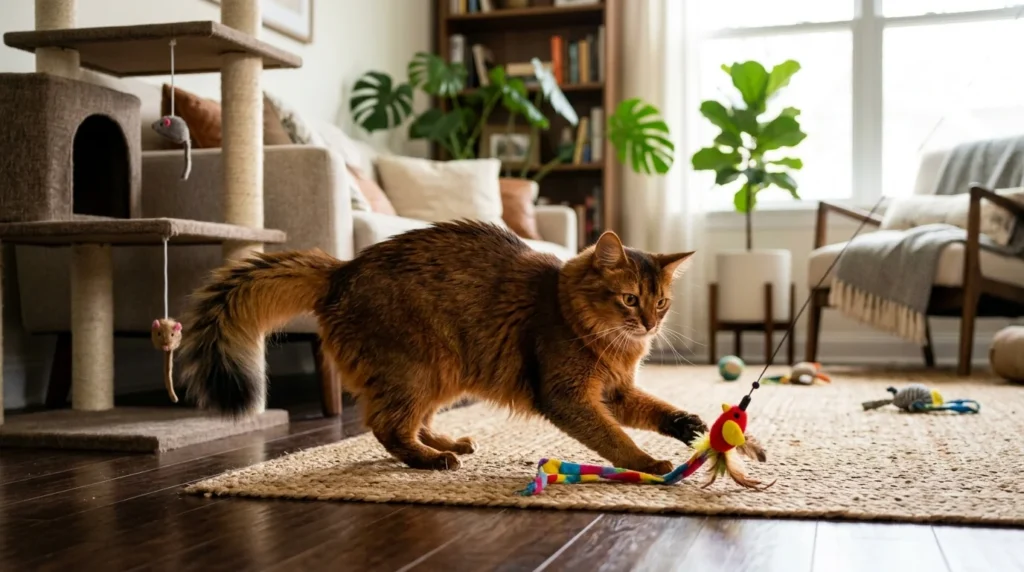
Daily activity is one of the biggest ownership requirements for this breed. These cats like to climb, chase, investigate, and interact with people. Hill’s specifically recommends high perches and cat trees to support their jumping and climbing. You might also like Sphynx Cat Price.
A good indoor setup combines vertical space with short, active play sessions. Rotate toys so the environment changes without requiring constant new purchases. Window perches can add safe visual stimulation for indoor cats in U.S. homes.
Health Concerns U.S. Owners Should Know
The Somali cat can develop inherited pyruvate kinase deficiency and progressive retinal atrophy. Both conditions have genetic tests that responsible breeders can use before breeding. PetMD and TICA specifically advise asking breeders about testing for these inherited problems.
Pyruvate kinase deficiency can cause anemia, weakness, pale gums, and other signs in affected cats. A published study also found that some affected cats showed few early signs. That makes documented genetic screening more useful than judging health from appearance alone.
Progressive retinal atrophy affects the retina and can lead to irreversible vision loss. Routine veterinary care also matters because these cats can develop common feline conditions with age. Pet owners researching medical costs can also review Knosten’s pet insurance coverage discussion for useful coverage questions.
Are These Cats Hypoallergenic?
No cat breed is guaranteed to be hypoallergenic, and this breed is not classified that way. Petfinder specifically lists the breed as non-hypoallergenic, while Hill’s lists it as not less allergenic. People with cat allergies should spend time around the breed before bringing one home.
Allergy reactions often relate to proteins in saliva and skin secretions, not hair length alone. Regular cleaning may reduce loose hair and dander in the environment. It cannot guarantee that an allergic person will tolerate a particular cat.
Living With Children and Other Pets
Many Somali cats do well in busy homes because they enjoy interaction and play. VCA describes them as gentle around children and adaptable with other family pets. Personality, socialization, introductions, and household handling still matter for every cat.
Children should learn to respect resting spaces and avoid grabbing the tail or coat. New pets should meet gradually through scent exchange and controlled introductions. A confident adult cat may still need quiet areas away from energetic children or dogs.
Choosing a Breeder or Adoption Route in the United States
Start with documented health testing rather than appearance or color alone. TICA provides a breeder directory and says listed members agree to its code of ethics. Ask for records covering relevant genetic tests, vaccinations, veterinary exams, and the kitten’s family history.
Adoption is also worth checking, especially through breed rescues and broad shelter networks. Petfinder maintains breed information and helps users search adoptable animals across the United States. Availability will vary because this breed is less common than many domestic cats.
A Practical Home-Fit Checklist
This breed fits households that can support activity, attention, and routine care. The checklist below focuses on daily realities rather than appearance alone. It can help you decide whether your home matches the breed’s needs.
- You can provide interactive play every day.
- You have safe vertical space for climbing and observation.
- You are comfortable with weekly coat care and regular dental care.
- You can budget for preventive veterinary visits and unexpected treatment.
- You can offer companionship or stimulation during regular absences.
- You will verify breeder health testing before buying a kitten.
These requirements matter because the breed combines high curiosity with strong social interest. A beautiful coat alone should not drive the decision to bring one home. Lifestyle fit will affect both the owner’s experience and the cat’s daily wellbeing.
Frequently Asked Questions
Is a Somali cat a good first cat?
It can be a good first cat for an engaged owner who enjoys daily interaction. The main challenge is its high need for play, climbing, and mental stimulation. A quieter household may prefer a less demanding breed or adult cat.
How often should this breed be groomed?
Weekly combing is enough for many healthy adults because the coat resists heavy matting. Some cats may need more brushing during seasonal shedding or after tangles develop. Nail care, dental hygiene, and routine skin checks should continue year-round.
How long can these cats be left alone?
There is no universal hourly limit because age, personality, and home setup differ. This social breed generally does better with enrichment and regular human contact. Long, repeated periods without play or company may lead to boredom and unwanted behavior.
Is This Breed Right for Your Home?
A Somali cat suits people who want an active, affectionate companion rather than a low-engagement pet. Its coat is manageable, but its energy and curiosity require daily attention. Before committing, meet the breed, confirm health testing, and plan for lifelong veterinary care.
If this profile matches your household, use reputable U.S. breed organizations and adoption networks for your next step. Compare breeder documentation carefully and avoid sellers who cannot show health records. You can also browse Knosten’s Pets section while planning a safe, engaging home.