
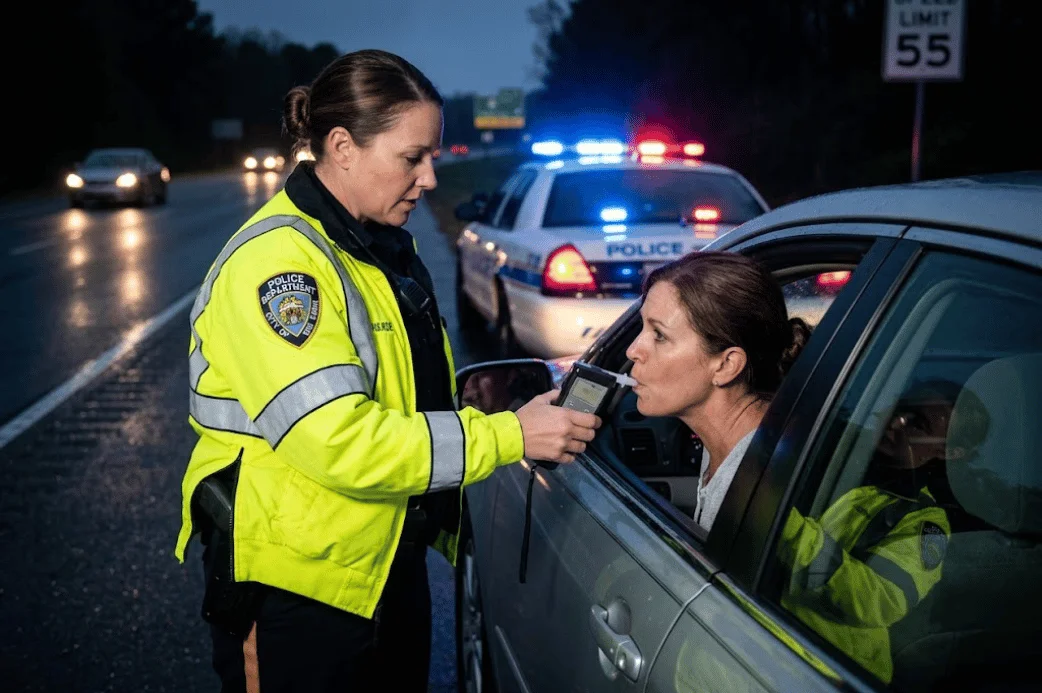
If you have seen the abbreviation BAC on a breathalyzer result, police report, medical record, or driving-safety page, you may wonder exactly what it means. In most U.S. health and driving contexts, BAC stands for blood alcohol concentration, a measurement used to describe the amount of alcohol in a person’s bloodstream. Understanding BAC can help explain why even relatively small amounts of alcohol may affect judgment, coordination, reaction time, and driving ability. It also helps put frequently mentioned numbers such as 0.05% and 0.08% into context.
Quick Answer
BAC stands for blood alcohol concentration, although “blood alcohol content” is also commonly used. BAC indicates how much alcohol is present in the bloodstream, usually expressed as a percentage or grams per deciliter. In the United States, 0.08% is a major legal threshold for most adult drivers, but impairment can begin at lower levels.
What Does BAC Stand For?
BAC stands for blood alcohol concentration, according to the National Highway Traffic Safety Administration (NHTSA) and the Centers for Disease Control and Prevention (CDC). The term describes the concentration of alcohol circulating in a person’s blood after alcohol has been consumed and absorbed. You may also hear people say “blood alcohol content,” but U.S. government agencies commonly use “blood alcohol concentration.”
BAC matters because alcohol circulating in the bloodstream also reaches the brain and other organs. As BAC increases, alcohol generally has a greater effect on functions needed for safe driving, including attention, coordination, judgment, vision, and reaction time. A person does not have to look obviously intoxicated for alcohol to interfere with these abilities.
What Does a BAC Number Actually Measure?
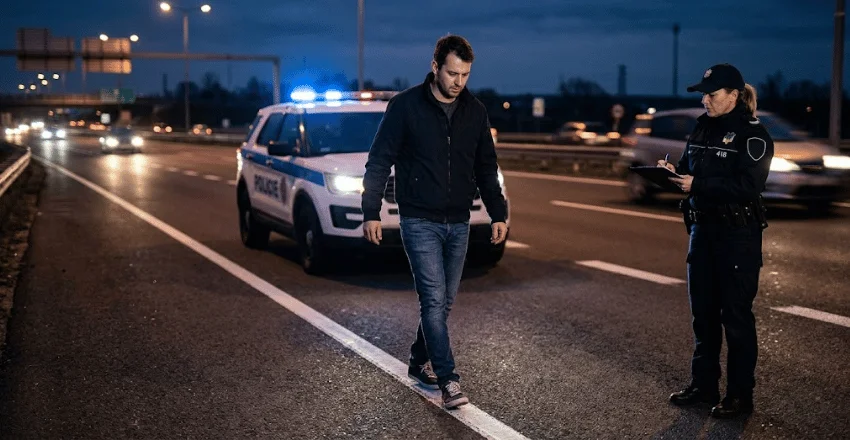
BAC measures the weight of alcohol within a specific volume of blood. NHTSA describes BAC in grams of alcohol per deciliter of blood, commonly written as g/dL. Therefore, a BAC of 0.08% corresponds to approximately 0.08 grams of alcohol per deciliter of blood.
Although 0.08% may seem small, its effects on driving can be substantial. At this level, NHTSA identifies problems involving coordination, concentration, short-term memory, speed control, information processing, and perception. This is one reason BAC measurements play such an important role in impaired-driving laws and enforcement.
Blood Alcohol Concentration vs. Blood Alcohol Content
“Blood alcohol concentration” and “blood alcohol content” are often used interchangeably in conversation. However, NHTSA, the CDC, and other U.S. public-health and transportation authorities commonly use the term blood alcohol concentration. When discussing legal BAC levels or interpreting official guidance, using “blood alcohol concentration” is therefore the clearest choice.
How Is BAC Measured?
BAC can be evaluated through alcohol testing, particularly blood testing and breath testing. A blood test directly measures the amount of alcohol in a blood sample, while a breath-testing device measures alcohol in exhaled breath and uses that information to determine breath alcohol concentration. NHTSA distinguishes BAC, or blood alcohol concentration, from BrAC, or breath alcohol concentration.
Common testing methods include the following.
- Blood test: Measures alcohol directly in a blood sample.
- Breath test: Measures alcohol in exhaled breath using a breath-testing device.
- Law-enforcement testing: Breath or blood results may be used as evidence in impaired-driving investigations, subject to applicable state law and testing requirements.
A personal breathalyzer can provide useful information, but drivers should not treat a consumer device as permission to drive after drinking. Testing equipment, timing, individual physiology, and other factors can affect readings, while driving ability may already be reduced below the applicable legal threshold. The safest approach after consuming alcohol is to use a sober driver, rideshare, taxi, public transportation, or another reliable way home.
What Do Different BAC Levels Mean?
Alcohol affects people differently, so a BAC number cannot predict every person’s exact behavior. Nevertheless, controlled research and traffic-safety data show recognizable patterns as alcohol concentration rises. The NHTSA guidance on drunk driving sets out typical effects at several BAC levels and emphasizes that impairment can occur before a person reaches 0.08%.
| BAC Level | Typical Effects Identified by NHTSA | Possible Driving Effects |
|---|---|---|
| \\*0.02%\\* | Some loss of judgment, relaxation, altered mood | Reduced ability to track moving objects and divide attention |
| \\*0.05%\\* | Lowered alertness, impaired judgment, reduced small-muscle control | Reduced coordination, difficulty steering, weaker response to emergencies |
| \\*0.08%\\* | Poorer coordination, reaction time, and judgment | Reduced concentration, memory, perception and speed control |
| \\*0.10%\\* | Clear deterioration in reaction time and control | Greater difficulty maintaining lane position and braking properly |
| \\*0.15%\\* | Major loss of balance and substantially reduced muscle control | Severe impairment of vehicle control and information processing |
These values should not be interpreted as stages that a person can safely “drink up to.” NHTSA reports measurable driving-related impairment below 0.08%, including reduced visual performance and divided attention at about 0.02%. The practical safety message is that being below the per se legal limit does not automatically mean a person is unimpaired.
What Is the Legal BAC Limit in the United States?
For most adult noncommercial drivers, 0.08% BAC is the per se limit in 49 states, while Utah has a lower limit of 0.05%. A per se limit means the BAC measurement itself can establish the prohibited alcohol concentration without requiring the government to prove impairment solely through a person’s behavior. The District of Columbia also uses the 0.08 g/dL standard referenced in federal highway-safety materials. Because individual state laws can change or contain additional provisions, drivers should check the law that applies where they are driving.
Different standards apply to some driver groups. The Federal Motor Carrier Safety Administration states that 0.04% BAC is the federal threshold at or above which a CDL holder operating a commercial motor vehicle is considered to be driving under the influence for federal disqualification purposes. Drivers under age 21 are also subject to zero-tolerance laws, with all states setting limits at 0.02% or lower, although the exact threshold can vary by jurisdiction.
A legal threshold should never be treated as a safety target. NHTSA specifically notes that driving performance begins to deteriorate below 0.08%, and alcohol can reduce important skills before a person recognizes that they are impaired. Depending on the circumstances and applicable state law, a driver may also face consequences for impaired driving even when a test result is below the standard adult per se threshold.
What Factors Affect Your BAC?
Two people can consume similar amounts of alcohol and end up with different BAC readings. The National Institute on Alcohol Abuse and Alcoholism (NIAAA) explains that BAC depends heavily on how much and how quickly a person drinks, along with differences in absorption, distribution, and alcohol metabolism. Body size, body-water distribution, biological sex, genetics, and individual metabolic differences may all influence the outcome.
Factors that can influence BAC include:
- Total amount of alcohol consumed.
- How quickly drinks are consumed.
- Body size and body mass.
- Body-water distribution.
- Biological sex.
- Individual metabolism.
- Genetics.
- Whether alcohol is consumed with or without food.
- Alcohol strength and actual serving size.
Food can slow alcohol absorption, but eating does not remove alcohol that has already entered the bloodstream. Likewise, having a higher body weight or drinking more slowly does not make impaired driving safe. Because several variables interact at once, estimating an individual’s BAC from the number of drinks alone can be unreliable.
How Many Drinks Can Raise BAC to 0.08%?
No universal number of drinks produces the same BAC for everyone. NIAAA states that, for a typical adult, a pattern of roughly four or more drinks for a woman or five or more drinks for a man in about two hours commonly brings BAC to 0.08% or higher. That pattern also meets its definition of binge drinking. These numbers are population-level guidelines, not a formula for determining whether an individual is safe to drive.
In the United States, one standard drink contains approximately 14 grams, or 0.6 fluid ounces, of pure alcohol. Examples include roughly 12 ounces of regular beer at 5% alcohol by volume, 5 ounces of wine at 12%, or 1.5 ounces of 80-proof distilled spirits. Actual cocktails, strong beers, oversized wine pours, and mixed drinks can contain more than one standard drink, making casual drink counting less reliable than many people assume.
Can Coffee, Food, or a Cold Shower Lower BAC Faster?
Once alcohol has entered the bloodstream, the body needs time to metabolize it. Coffee may make someone feel more alert, but it does not reverse alcohol-related problems with judgment or coordination, and cold showers or exercise do not make the liver process alcohol faster. NIAAA therefore warns that there are no quick methods for becoming sober and that time is what allows the body to metabolize alcohol.
This is especially important when someone is considering driving several hours after drinking. Feeling awake, drinking water, eating breakfast, or no longer feeling “buzzed” does not prove that BAC has returned to zero or that driving skills have fully recovered. When you’re unsure, choosing alternative transportation is safer than trying to calculate whether enough time has passed.
BAC vs. ABV: What Is the Difference?
BAC and ABV are both alcohol-related percentages, but they describe completely different things. BAC measures alcohol in a person’s bloodstream, whereas ABV, or alcohol by volume, measures the concentration of alcohol in a beverage. A beer labeled 5% ABV therefore tells you the strength of the drink, not the drinker’s resulting blood alcohol concentration.
ABV still matters because stronger drinks can contain substantially more alcohol within the same serving volume. For example, NIAAA notes that a 12-ounce beer at 10% ABV can contain about twice as much alcohol as a 12-ounce beer at 5% ABV. Looking only at the number of glasses or cans consumed can therefore underestimate total alcohol intake.
When Does a High BAC Become a Medical Emergency?
As BAC rises, the danger extends well beyond poor driving. The NIAAA fact sheet on alcohol overdose reports that binge drinking brings BAC to 0.08% or higher, and that high-intensity drinking means consuming at least twice that number of drinks. At those levels, alcohol can interfere with critical brain functions controlling breathing, heart rate, body temperature, and consciousness. An alcohol overdose is a life-threatening emergency. A person’s BAC can also continue increasing after they stop drinking because alcohol remaining in the stomach and intestines may still be absorbed into the bloodstream.
Warning signs of possible alcohol overdose include the following.
- Mental confusion or stupor.
- Difficulty staying conscious or inability to wake up.
- Vomiting.
- Seizures.
- Slow breathing.
- Irregular breathing.
- Clammy skin.
- Very low body temperature.
- Bluish skin color or unusual paleness.
If you suspect an alcohol overdose, call 911 immediately rather than waiting for every symptom to appear. NIAAA warns that a person who has passed out can die and that coffee, walking, or cold showers cannot reverse an overdose. Stay with the person and follow emergency-dispatch instructions while medical help is on the way.
Why BAC Matters Even Below the Legal Limit
The biggest misconception surrounding BAC is that 0.08% separates “safe” driving from “unsafe” driving. In reality, NHTSA reports changes in judgment and driving-related visual functions at approximately 0.02% and reduced coordination and emergency-response ability around 0.05%. The 0.08% standard is primarily a legal threshold for most adult drivers, not a guarantee that lower BAC levels are harmless.
Planning transportation before drinking removes the need to decide whether to drive after judgment may already be affected. A designated sober driver, rideshare service, taxi, public transportation, or overnight stay is preferable to estimating impairment based on how someone feels. If a crash does occur, Knosten also has related guidance explaining issues that can arise when dealing with an early settlement offer after a car accident.
Frequently Asked Questions About BAC
Does BAC stand for blood alcohol content or concentration?
BAC most formally stands for blood alcohol concentration in terminology used by agencies such as NHTSA and CDC. “Blood alcohol content” is also widely used and generally refers to the same concept in everyday discussion. When accuracy matters in medical, legal, or traffic-safety writing, “blood alcohol concentration” is the preferable term.
What does a 0.08 BAC mean?
A BAC of 0.08% means approximately 0.08 grams of alcohol per deciliter of blood. At this level, NHTSA identifies substantial effects on coordination, judgment, concentration, memory, perception, and reaction time. It is also the adult per se driving limit in 49 states, while Utah uses 0.05%.
Can you be impaired with a BAC below 0.08%?
Yes, alcohol-related driving impairment can begin below 0.08%. NHTSA identifies declines in certain visual and divided-attention functions at approximately 0.02% and additional coordination and steering difficulties around 0.05%. Being below the standard legal threshold therefore does not mean a person is necessarily safe to drive.
What is the BAC limit for commercial drivers?
FMCSA sets 0.04% BAC as the level at or above which a CDL holder operating a commercial motor vehicle is considered to be driving under the influence for purposes of federal disqualification rules. Commercial drivers therefore face a stricter alcohol threshold than most adult noncommercial drivers. Additional employer, state, or federal alcohol restrictions may also apply depending on the driver’s circumstances.
What is the BAC limit for drivers under 21?
All U.S. states have zero-tolerance BAC limits of 0.02% or lower for drivers younger than 21. The precise threshold varies because some jurisdictions set the limit below 0.02%. Underage drivers should therefore never assume that the standard adult 0.08% threshold applies to them.
Can a BAC calculator tell you whether it is safe to drive?
A BAC calculator can provide only an estimate because real BAC is affected by multiple individual and situational variables. It cannot directly measure your bloodstream, accurately determine your impairment level, or guarantee you are below the legal limit. For that reason, an online calculator should never be used as a green light to drive after drinking.
Does coffee lower BAC?
Coffee does not lower BAC faster or eliminate alcohol-related impairment. Caffeine can make someone feel less sleepy, but NIAAA notes that it does not restore normal decision-making or coordination after drinking. The body still needs time to metabolize the alcohol already in the system.
Final Takeaway
In the context of alcohol and U.S. driving laws, BAC stands for blood alcohol concentration, the measurement used to indicate how much alcohol is present in the bloodstream. Although 0.08% is the best-known U.S. legal threshold, Utah uses 0.05%, commercial drivers face a 0.04% federal threshold, and under-21 drivers face limits of 0.02% or lower. Most importantly, impairment can begin before those legal limits are reached, so a BAC number should never be treated as a target for deciding how much someone can drink before driving.