
At a Glance
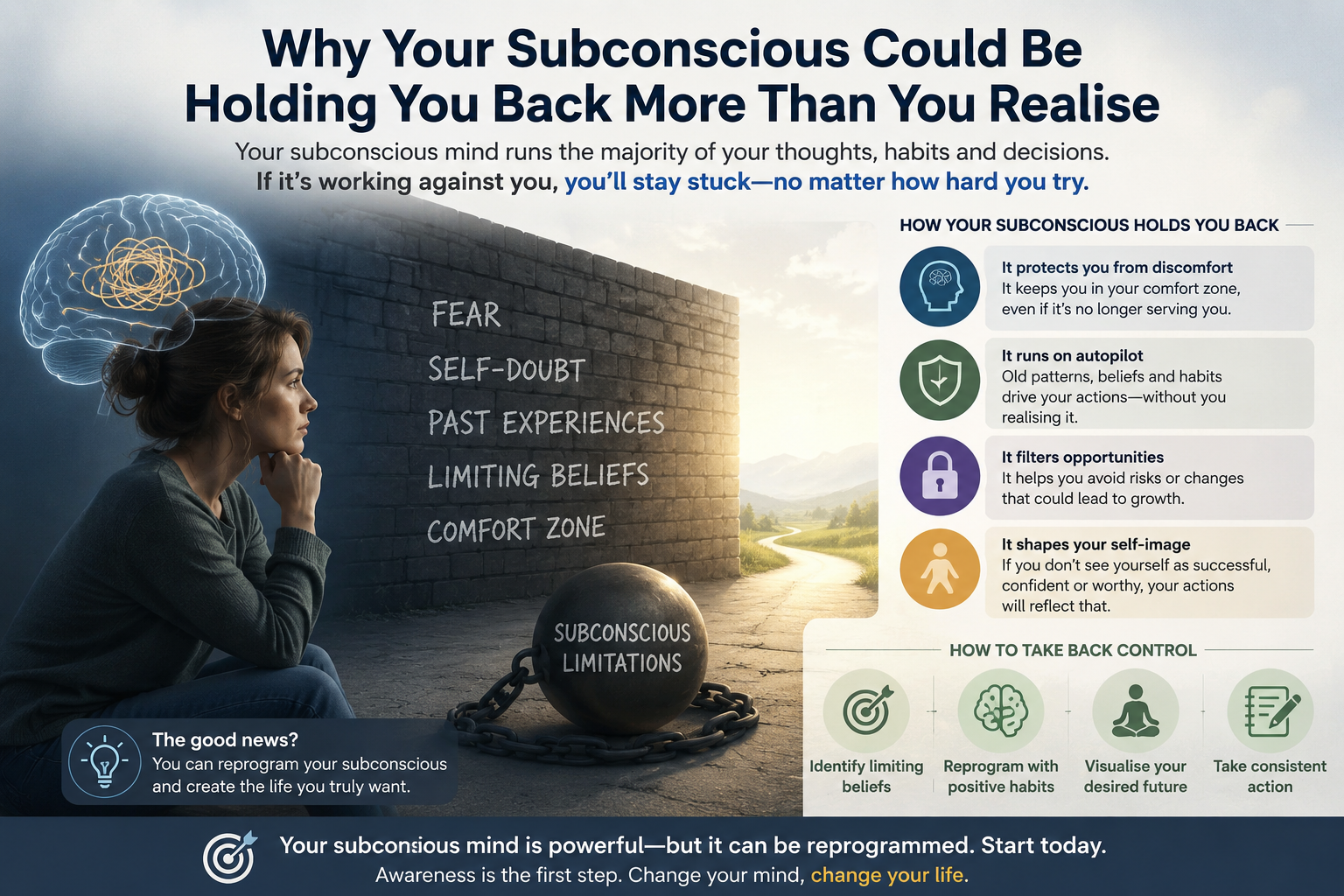
The patterns influencing your behaviour are not always obvious. Past experiences, familiar habits and automatic responses can shape how you react to situations without conscious thought. Recognising these patterns can help you understand why certain behaviours feel difficult to change. With greater awareness, you can begin approaching those habits differently and make choices that better reflect what you actually want.
The Subconscious Can Influence Everyday Behaviour
You make countless decisions throughout the day without consciously thinking through every one. Some actions have become so familiar that they happen almost automatically. You might reach for a particular snack after a stressful day, postpone something whenever it feels difficult or follow the same routine just because it feels familiar.
These patterns are not necessarily a sign that something is wrong. The brain naturally relies on familiar responses to make everyday life easier. However, a habit can persist even when it no longer fits what you want.
This is where becoming more aware of your patterns can make a difference. Rather than just asking why you cannot change a behaviour, it can be useful to consider what really happens immediately before it. Understanding the trigger, response and reward gives you a clearer picture of what you are actually trying to change.
Familiar Patterns Can Feel Harder to Break
A behaviour that has been repeated over time can become closely associated with particular situations. Maybe you always snack while watching television, reach for something sweet when work becomes stressful or avoid a task whenever you feel uncertain about the outcome.
Eventually, the behaviour can feel like part of the situation. You may not consciously decide to repeat it because the response has become familiar.
Changing that pattern does not necessarily mean relying just on willpower. Recognising when the behaviour appears allows you to pause and consider another response. Even that small moment of awareness can help you approach a familiar habit with more intention.
Emotions Can Shape the Choices You Make
Your emotional state can influence how you respond to everyday situations. Stress, boredom, frustration and tiredness can affect the choices you make, especially when a particular behaviour has become associated with relief or comfort.
For example, someone might associate sweet foods with relaxation after a demanding day. Over time, reaching for those foods can become an automatic response to feeling stressed rather than a decision based purely on hunger.
Understanding this connection can help you look beyond the behaviour itself. Instead of focusing only on what you are doing, you can consider what you are feeling beforehand and what you expect the behaviour to provide.
Changing a Habit Starts With Understanding It
It is easy to become frustrated when you repeatedly return to a behaviour you are trying to change. However, judging yourself for the pattern does not explain why it continues.
A more useful starting point is to identify when, where and why the behaviour occurs. You might notice particular times of day, emotional stress, environments or routines that make the behaviour more likely.
This awareness gives you something practical to work with. You can begin considering alternative responses and gradually create different associations around situations that previously triggered the same automatic reaction.
Where Hypnotherapy May Fit Into Behaviour Change
Some people explore hypnotherapy when they want to understand and change established behavioural patterns. Hypnotherapy uses guided relaxation and focused attention to work with thoughts, associations and responses that may be influencing a particular behaviour.
It is not a magic solution and results can vary between individuals. However, some people choose it as part of a broader approach to changing habits because it offers an opportunity to focus on the underlying patterns linked to their behaviour.
For someone researching “hypnotherapy for sugar addiction in London”, the important consideration is finding an appropriately qualified practitioner who can explain their approach clearly. You should understand what the sessions involve, what to realistically expect and whether the approach is suitable for your circumstances.
Small Changes Can Become New Patterns
Changing an existing habit rarely happens because of a single perfect decision. More often, progress comes from noticing familiar patterns and responding to them differently over time.
You might pause before acting on an automatic impulse, change part of your usual routine or find another way to respond to a particular emotional trigger. Repeating these alternatives can slowly make them feel more familiar.
The aim is not to control every thought or decision you make. It is to become more aware of the patterns influencing your behaviour, so you have greater choice in how you respond.
To Sum Up
Your subconscious is not necessarily working against you. Many of the behaviours that feel automatic developed because they were repeated, habitual or linked to particular experiences. Understanding those patterns can help you see your habits more clearly rather than blaming yourself for them.
Whether you explore hypnotherapy or another approach to behaviour change, awareness is an important starting point. When you understand what triggers the behaviour and what keeps it going, you can begin making different choices while slowly building patterns that better support the life you want.