

If you are asking do I need a lawyer for traffic court, the answer is usually no for a routine, low-level ticket. Many U.S. drivers can pay, contest, or otherwise resolve minor citations without hiring an attorney. The decision changes when a conviction could threaten your license, job, finances, or freedom.
Usually, you do not need a lawyer for a minor traffic infraction, and many U.S. drivers represent themselves. Legal help becomes more valuable when the charge can bring jail, license suspension, major points, job consequences, or a criminal record. State and local rules differ, so check the court named on your citation before deciding.
| Your situation | Lawyer usually needed? | Main issue to consider |
|---|---|---|
| First minor speeding or stop-sign ticket | Often no | Fine, points, and available court options |
| You want to contest a straightforward citation | Optional | Evidence and comfort representing yourself |
| License suspension may result | Strongly consider one | Ability to keep driving |
| DUI, reckless driving, or another criminal charge | Strongly consider one | Jail, criminal record, and license penalties |
| You have a CDL or drive for work | Often worth consulting one | Employment and federal CDL consequences |
| Several recent convictions or points | Often worth consulting one | Added penalties or suspension |
| Ticket followed a serious crash | Consider legal advice | Traffic, insurance, and civil issues may overlap |
Key takeaways: A lawyer is not automatically required because you received a traffic citation. Start by identifying whether the offense is a minor infraction or a criminal charge, then check the possible penalties and your record. The greater the risk to your license, livelihood, or freedom, the stronger the reason to speak with a qualified local attorney.
Legal information notice: This article provides general information for U.S. readers and is not legal advice for a specific case. Traffic laws, court procedures, point systems, and attorney rules differ among states and local courts. Read your citation and confirm the applicable requirements with the court or a lawyer licensed in your state.
Do I Need a Lawyer for Traffic Court If the Ticket Is Minor?
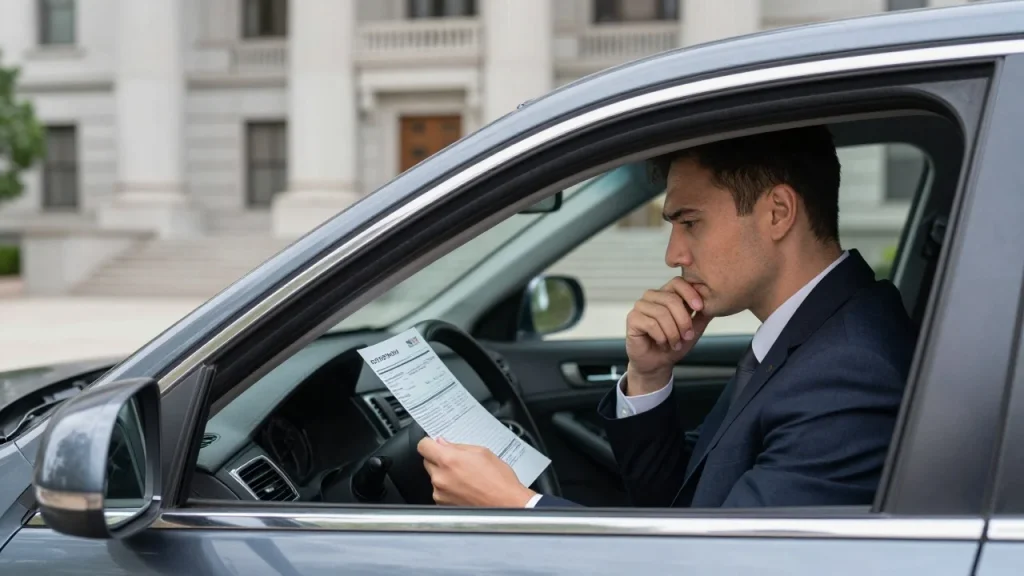
For an ordinary speeding ticket, stop-sign violation, or similar infraction, you can often handle the matter yourself. Current traffic-law guidance from Nolo notes that many people represent themselves in simple moving-violation cases. Court resources also commonly provide self-help procedures for drivers who choose to contest minor citations without counsel.
The key is to understand what resolving the ticket means before you act. For example, Maryland Courts describes paying a payable ticket as pleading guilty, while California guidance similarly warns that paying an infraction is treated as an admission. Your state may use different terminology, so never assume that paying a fine has no effect beyond the payment itself.
Readers who want more plain-English material about court procedures can browse Knosten’s Law section. That section collects legal explainers covering court-related questions and situations where professional advice may matter. It can provide useful background, although the rules governing your ticket must come from your jurisdiction.
7 Signs Hiring a Traffic Lawyer May Be Worth It
A practical way to make the decision is to focus on what you could lose rather than the size of the printed fine alone. A $200 citation and a case that could suspend your license are not the same problem, even if both started with a traffic stop. These seven warning signs deserve closer attention.
- The charge is criminal or jail is possible. DUI, reckless driving, hit-and-run, driving while suspended, and similar offenses can be much more serious than ordinary infractions. If your citation lists a misdemeanor or felony charge, seek legal advice promptly.
- Your license could be suspended or revoked. Losing driving privileges can affect work, school, childcare, and daily transportation. Representation may be worth considering when another conviction could trigger a suspension.
- You hold a commercial driver’s license. Federal CDL rules can create disqualification consequences for certain serious traffic violations. FMCSA states that a second qualifying serious violation within three years can lead to a 60-day disqualification, while a third can result in 120 days.
- Driving is part of your job. Delivery drivers, sales representatives, tradespeople, rideshare drivers, and others may have more at stake than the fine itself. A poor driving record can create employment or insurance problems even when a citation is not criminal.
- You already have prior tickets or points. Another conviction can matter more when your record is already close to a state suspension threshold. A local attorney can explain how the new charge interacts with your existing record.
- The citation followed a serious accident. A crash can create separate traffic, insurance, injury, and civil-liability questions. Those issues may require different legal strategies, especially when another person was injured or substantial property damage occurred.
- The case depends on disputed evidence or procedure. Radar or speed-measurement evidence, identification, signs, road conditions, witnesses, video, and procedural rules may affect a contested case. An attorney familiar with the local court can assess which arguments have legal value instead of relying on courtroom myths.
Minor Infractions and Criminal Traffic Charges Are Different
The word “ticket” can make every traffic case sound minor, but the legal classification matters more than the paper itself. California Courts, for example, explains that ordinary infractions such as speeding do not carry jail in that state, while misdemeanors can carry incarceration and other penalties. Other states classify offenses differently, which is why your citation and local law should control the analysis.
This distinction should be one of the first things you check. Look for the statute or ordinance number on the citation, the type of charge, your response deadline, and whether a court appearance is mandatory. If the wording is unclear, contact the clerk for procedural information or speak with a lawyer for legal advice.
More serious driving cases may also introduce criminal-court concepts that do not appear in routine ticket hearings. Knosten’s explanation of what a mistrial means shows why procedural terms can have specific legal consequences. You should not assume that television courtroom rules or advice from another state applies to your proceeding.
Will the Court Give You a Free Lawyer?
A court-appointed attorney is generally not provided simply because someone wants to challenge a routine, fine-only traffic infraction. The constitutional rule focuses heavily on imprisonment, and states may provide additional protections under their own laws. That means the answer depends on the seriousness of the charge, possible sentence, financial eligibility, and applicable state procedure.
In Argersinger v. Hamlin, the U.S. Supreme Court held that a person cannot be imprisoned for an offense after an uncounseled trial unless counsel was validly waived. The Court later addressed suspended imprisonment in Alabama v. Shelton, holding that an uncounseled defendant could not receive a suspended jail sentence that could later deprive the person of liberty. These rules are another reason to distinguish a routine citation from a criminal driving case.
If you face a misdemeanor, possible incarceration, or a suspended jail sentence and cannot afford counsel, raise the issue with the court. Do not assume that a public defender will automatically appear simply because a court date is scheduled. The court can explain its application process, while a licensed attorney can advise you about your rights.
What Can a Traffic Lawyer Do for Your Case?
A traffic attorney can examine the charge, evidence, local rules, and consequences before recommending a response. Depending on the jurisdiction and case, counsel may communicate with the prosecutor, challenge evidence, negotiate an available reduction, present legal arguments, or represent you at a hearing. No ethical lawyer can promise that a ticket will disappear or that points will always be removed.
Local familiarity can also matter because traffic procedures are not uniform nationwide. Justia notes that attorneys who regularly work in the relevant court may understand its procedures and how particular types of citations are handled. That experience can be valuable when the stakes justify the added expense.
The cost-benefit question should include more than the attorney’s fee. Consider the fine, possible points, license consequences, missed work, insurance effects, and employment concerns that could follow a conviction. A short consultation may help you identify consequences that are not obvious from the amount printed on the citation.
When Representing Yourself Can Make Sense
Self-representation may be reasonable when the violation is minor, no jail is possible, your driving record is good, and you understand the consequences of each available plea or disposition. You should also feel comfortable organizing evidence and speaking clearly before the judge. Being able to represent yourself does not mean you should walk into the hearing without preparation.
Before your hearing, check the citation deadline, read the charged law, review the court’s instructions, organize photographs or documents, and identify any witnesses you may legally present. Learn whether discovery is available and whether the court requires documents to be submitted before the hearing. Keep your argument focused on facts and the legal elements of the alleged violation rather than complaints about the officer or the fairness of traffic enforcement.
Courtroom procedure can differ even between counties in the same state. Confirm where to appear, when to arrive, what identification to bring, and whether remote appearances are allowed. Missing a required deadline or hearing can create problems that are harder to solve than the original citation.
A Simple Five-Factor Test Before You Decide
You can screen your situation by asking five questions: Could I face jail, could I lose my license, could my job be affected, do I have prior violations, and is the case legally or factually complicated? This is a practical decision tool rather than a rule of law. The more “yes” answers you have, the stronger the case for at least consulting a local traffic attorney.
| Risk factor | Lower-risk example | Higher-risk example |
|---|---|---|
| Freedom | Fine-only infraction | Criminal charge with possible jail |
| License | Clean record, few consequences | Suspension or revocation risk |
| Employment | Driving unrelated to job | CDL or driving required for work |
| Record | First minor citation | Multiple prior convictions |
| Complexity | Straightforward facts | Accident, disputed evidence, or multiple charges |
This approach prevents one common mistake: deciding based only on the amount of the fine. A small fine can still matter if the conviction creates a licensing or employment problem. A larger fine may be easier to handle alone when the legal issues and long-term consequences are limited.
What If the Ticket Came From a Car Accident?
A citation issued after a collision deserves extra care because the traffic charge may not be the only legal issue. Statements made about the crash can also matter to insurance claims or later civil disputes, depending on the facts and state law. If anyone was seriously injured, speak with an appropriate lawyer before assuming the ticket and the accident claim should be handled as one problem.
Knosten also explains why drivers should be careful about an early settlement after a car accident. A traffic citation and an injury settlement involve different legal questions, so resolving one does not necessarily resolve the other. Keep court deadlines, insurance deadlines, and any civil claim requirements separate.
The Bottom Line
You do not automatically need an attorney every time you receive a traffic citation. The most useful question is whether the case threatens something important beyond the immediate fine, such as your freedom, license, driving record, or livelihood. Once those stakes rise, getting advice from a lawyer who practices in the relevant state and local court becomes much more sensible.
Start by reading the entire citation and identifying the exact charge and response deadline. Check the official court or motor-vehicle agency guidance for your jurisdiction before paying, pleading, or requesting a hearing. If the consequences remain unclear after that review, a consultation with a local traffic lawyer can help you make an informed decision before the deadline passes.
Frequently Asked Questions
Do I Need a Lawyer for Traffic Court for a Speeding Ticket?
Usually not for a simple first speeding citation with no threat of jail or license suspension. Many drivers can use the court’s self-help procedures or represent themselves if they choose to contest the ticket. A consultation becomes more useful when the speed is high, your record is poor, or your license or job is at risk.
Can a Lawyer Get a Traffic Ticket Dismissed?
A lawyer may identify defenses or procedural problems that support dismissal, but no result is guaranteed. Other possible outcomes can include a negotiated charge, reduced penalties, or another disposition allowed by local law. The available options depend on the evidence, offense, prosecutor, judge, and jurisdiction.
Do I Have to Appear in Court If I Hire an Attorney?
Sometimes an attorney can handle parts of a traffic case without the driver being personally present, but there is no nationwide rule allowing this. Serious charges and some local courts may require your appearance even when you have counsel. Ask both the attorney and the court about appearance requirements before relying on someone else to attend.
Is Hiring a Traffic Lawyer Worth the Cost?
It can be when the potential consequences exceed the attorney’s fee or when your case presents a meaningful legal issue. License loss, CDL problems, job consequences, repeated violations, and criminal charges increase the value of getting professional advice. For a routine low-risk ticket, self-representation may be the more economical choice.