

An ice machine business can sell bagged ice, bulk ice, and filtered water around the clock. Customers use a self-service kiosk, so you may not need employees stationed there. However, success depends heavily on location, equipment reliability, utilities, sanitation, and realistic sales expectations. Quick answer: Starting an ice vending operation involves finding a strong site, securing water and electrical service, choosing suitable equipment, obtaining local approvals, and maintaining sanitary conditions. Before buying a machine, verify local demand, request vendor quotes, model seasonal sales, and confirm requirements with your local health department.
Ice Vending Business at a Glance
| Factor | What to Know |
|---|---|
| Business model | Self-service sales of bagged ice, bulk ice, filtered water, or a combination |
| Typical operating model | 24/7 unattended kiosk with periodic owner maintenance |
| Location priorities | Traffic, visibility, easy vehicle access, utilities, security |
| Site agreement | Ground lease, fixed rent, or negotiated revenue share |
| Equipment | Large standalone kiosk or smaller vending unit |
| Payments | Card payments are increasingly important; some units also accept cash |
| Major ongoing work | Cleaning, filters, inspections, repairs, payment monitoring |
| Regulation | Business, health, food-safety, water, zoning, and tax rules may apply |
| Main competitors | Convenience stores, gas stations, grocery stores, and other kiosks |
| Main risks | Weak site, breakdowns, weather, seasonality, financing, overstated income claims |
How Does an Ice Vending Operation Work?
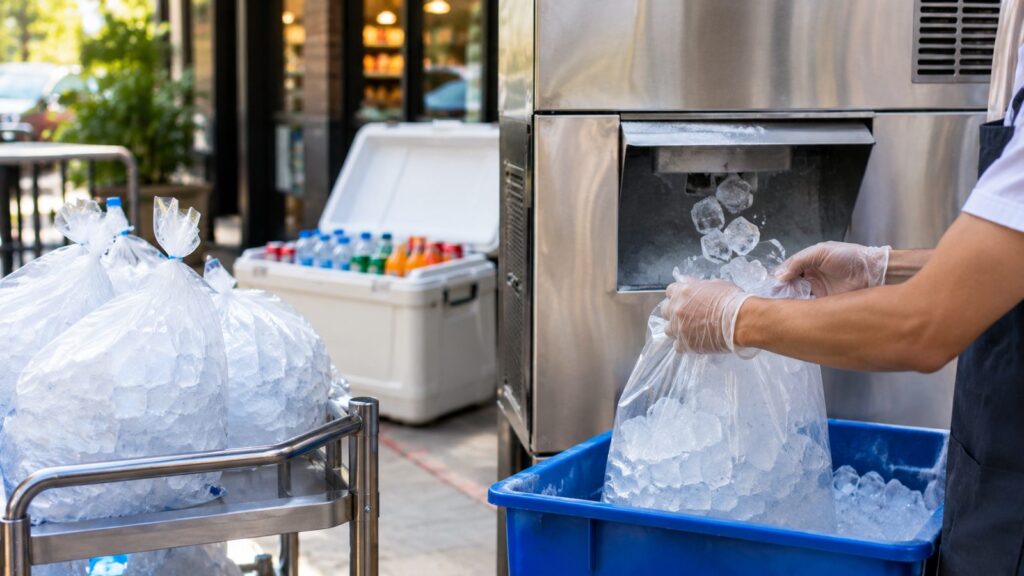
Most modern kiosks connect directly to electricity and an approved water supply. The equipment filters water, freezes ice, stores it, and dispenses purchased quantities automatically. Some systems also let customers fill coolers or purchase filtered water separately. A card reader can reduce dependence on coins and cash. Remote monitoring may also show sales, faults, inventory conditions, or equipment alerts. These tools reduce visits, but they don’t make the operation hands-off. You still own a food-producing machine exposed to weather and repeated customer use. Filters require replacement, surfaces need cleaning, and refrigeration components can fail. Treat the kiosk as operating equipment rather than a passive-income product.
8 Steps to Start an Ice Machine Business
1. Study Local Demand Before Buying Equipment
Start by examining where people already purchase ice. Look at convenience stores, supermarkets, campgrounds, marinas, sports areas, highways, and outdoor recreation locations. Seasonal destinations may produce strong summer demand but weak winter traffic. Visit potential areas at different times and days. Count competing sellers and compare their visibility, access, and customer activity. Knosten’s article on researching a market before expanding offers useful planning principles for this stage.
2. Choose a Location With Traffic and Easy Access
Vehicle traffic alone doesn’t guarantee sales. Drivers must notice the kiosk early enough to enter safely, park, complete a purchase, and leave easily. Nighttime lighting and clear signage also matter for a 24-hour operation. Confirm water and electrical hookups before signing a site agreement. Bringing utilities across a large property can change your economics quickly. Ask a qualified contractor what the specific site requires. Your arrangement with the landowner may use fixed rent or a revenue-sharing structure. Document utility responsibilities, maintenance access, signage rights, and contract duration. Have an attorney review significant lease obligations before committing capital.
3. Compare Standalone Kiosks and Smaller Units
Large standalone kiosks can produce, store, and dispense substantial volumes on site. Smaller systems may need less space and could suit properties with lower expected demand. Capacity should match the location rather than the salesperson’s largest available model. Ask suppliers about production capacity, storage, filtration, refrigeration components, warranties, and replacement parts. Confirm which payment systems are supported and who services them. Request references from current operators instead of relying only on testimonials. Compare card processing arrangements carefully. Review transaction fees, cellular requirements, remote monitoring subscriptions, and ownership of customer-payment hardware. These recurring costs belong in your financial model.
4. Build a Quote-Based Startup Budget
There is no responsible single national startup price for this business. Equipment, freight, utility work, concrete, permitting, and site costs vary substantially. Get written quotes based on your proposed location and equipment configuration. Your budget should include these categories.
- Vending or production equipment
- Water filtration and treatment
- Freight and installation
- Concrete pad or site preparation
- Electrical service and wiring
- Water connection and backflow equipment
- Card reader and payment setup
- Permits and inspections
- Signage and lighting
- Lease deposits or site payments
- Insurance
- Initial filters and sanitation supplies
- Repair contingency
- Working capital
Hypothetical example: Assume a proposed project has equipment, installation, site preparation, permitting, and reserves totaling $80,000. That figure is only a planning illustration. It is not a market price, so obtain current vendor and contractor quotes before making decisions.
5. Confirm Licenses, Food Rules, Water Requirements, and Taxes
Packaged ice is regulated as food by the U.S. Food and Drug Administration. FDA guidance requires sanitary production, handling, equipment, and safe water. State and local agencies often oversee retail establishments producing ice for direct local sale. Contact the local health department before ordering equipment. Ask about plan review, food-establishment requirements, water testing, sanitation records, labeling, and inspections. Requirements can differ substantially among states, counties, and cities. You may also need business registration, local permits, vending approvals, and zoning clearance. Sales-tax treatment varies by jurisdiction, including how states classify food and vending transactions. Discuss registration and tax obligations with an accountant familiar with your state. If water comes from a private source, testing obligations deserve extra attention. Even municipal water does not remove your sanitation responsibilities. Ask the health authority exactly what testing and treatment records your location must maintain.
6. Create a Sanitation and Maintenance Schedule
Build maintenance into the business model before opening. Follow manufacturer instructions for filter changes, cleaning, sanitizing, refrigeration service, and component inspections. Keep records so recurring work isn’t dependent on memory. Inspect dispensing areas for contamination, insects, standing water, or customer damage. Clean surfaces on a defined schedule and respond quickly to alerts. A machine producing food needs more care than an ordinary snack vending cabinet. Develop relationships with qualified refrigeration, plumbing, and electrical technicians. Ask equipment vendors how quickly critical parts are normally supplied. A busy summer weekend becomes expensive if the kiosk remains offline.
7. Model Revenue Conservatively
Sales depend on traffic, weather, local habits, competition, operating uptime, and your price per bag. Hot months may produce far more demand in many regions. Avoid forecasting twelve identical months simply because a spreadsheet looks cleaner. Test several scenarios instead. Model lower sales, expected sales, and stronger sales while changing price, maintenance, card fees, utilities, rent, and repairs. Knosten’s article about using financial data for business decisions explains why trend analysis matters. Pay particular attention to downtime. A machine cannot generate sales while waiting for a part or technician. Set aside cash for repairs instead of treating every operating surplus as owner income.
8. Measure the Site After Launch
Track daily transactions, average purchase value, uptime, payment failures, service calls, and seasonal changes. Compare those figures with your original assumptions every month. Small performance problems can become expensive if nobody monitors them. Test signage or pricing changes one at a time. This makes it easier to identify what caused a result. Keep maintenance records beside financial data so you can see whether equipment problems affected sales. For broader entrepreneurship and operating topics, Knosten’s business section provides additional planning material. Use outside professional advice when decisions involve taxes, contracts, or food regulation.
What Drives Revenue?
Location quality often matters more than promotional claims about machine capacity. A visible kiosk near customers who regularly need ice has a stronger starting position. Convenient parking and quick payment can also influence repeat use. Price per bag matters, but lower prices do not automatically create better economics. Compare local grocery and gas-station pricing before setting your offer. Your product must compete on some combination of convenience, quantity, price, water quality, or availability. Weather creates another major variable. Hot summers, boating activity, construction work, sporting events, and tourism can increase demand. Cold periods may reduce purchases sharply in some markets.
Competition: You’re Not Only Competing With Other Kiosks
Gas stations and grocery stores already have regular customer traffic. Many shoppers buy ice while purchasing fuel, food, or drinks. Your location must give them a reason to make a separate stop. Convenience can be your strongest advantage. A 24/7 kiosk may offer quick access without store lines or restricted opening hours. Bulk dispensing can also appeal to customers filling large coolers. Study competitor weaknesses before assuming demand exists. Nearby stores may already offer aggressive pricing or prominent freezer displays. A machine placed beside established sellers needs a clear reason for customers to switch.
The Biggest Risks to Consider
Equipment breakdown is an immediate operational risk. Refrigeration, payment, filtration, dispensing, or electrical failures can stop sales. Warranty coverage helps, but it does not replace access to service and parts. Weather creates both opportunity and exposure. Heat can increase demand while also placing refrigeration systems under heavier loads. Freezing conditions, storms, flooding, and power outages can create different problems. A weak lease can also damage an otherwise promising operation. Losing a proven site may force expensive relocation. Review assignment rights, renewal terms, utility obligations, signage rights, and termination clauses carefully. Be skeptical of sellers promoting guaranteed returns or effortless passive income. Turnkey and franchise-style offers can make attractive revenue claims that aren’t representative of every site. Ask for written evidence, actual operator references, and complete disclosure documents. The Federal Trade Commission’s Business Opportunity Rule may apply to certain opportunity sellers. Covered sellers face disclosure requirements, while earnings claims require supporting information. Treat missing documentation or pressure to pay quickly as reasons for deeper scrutiny.
Frequently Asked Questions About an Ice Machine Business
Is an ice machine business passive income?
An ice machine business can require less staffing than a traditional store, but it isn’t truly passive. Owners still handle cleaning, repairs, permits, bookkeeping, site relationships, and customer issues. Remote monitoring reduces visits but does not remove operating responsibility.
Do I need a health permit to sell ice?
Requirements depend on the state and local jurisdiction. Packaged ice is food under federal FDA rules, while local authorities often regulate retail production and sanitation. Contact the local health department before purchasing equipment or preparing a site.
How much does an ice vending machine cost?
There is no single reliable national price that fits every project. Machine size, options, freight, installation, site work, and utilities can change the total significantly. Request current written quotes from several suppliers and local contractors.
Should I lease land or offer the owner a revenue share?
Either structure can work, depending on the property and negotiating leverage. Fixed rent creates predictable site costs, while revenue sharing changes with sales. Compare both structures using conservative demand assumptions before signing.
Is card payment worth adding?
Card acceptance can make purchases easier for customers who carry little cash. It also introduces processing fees, hardware costs, and possible network dependencies. Compare payment systems before choosing your machine configuration.
Final Checklist Before You Commit
An ice vending kiosk can become a practical unattended retail operation, but the location must support it. Equipment quality and sanitation also require ongoing attention. No machine converts a weak site into a strong business automatically. Before committing money, get equipment and site-work quotes from several providers. Speak with your local health department about food and water requirements. Then ask an accountant to review taxes, cash flow, depreciation, financing, and realistic operating scenarios. Treat income projections as assumptions until real sales prove them. Verify claims made by franchise, turnkey, or business-opportunity sellers independently. A careful decision is more valuable than a persuasive passive-income presentation. —