
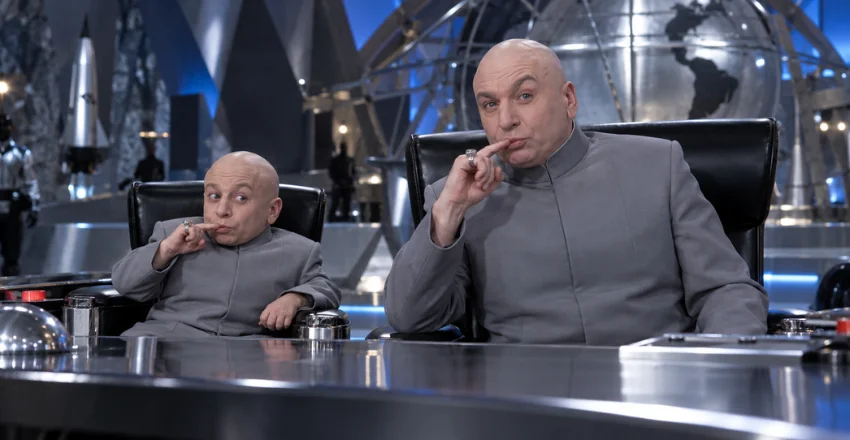
Dr evil and mini me became one of the most recognizable pairings in the Austin Powers movies. Their matching clothes and strange loyalty made for an instantly memorable comedy duo. The partnership also gave the franchise a new way to parody classic spy villains.
Mini-Me first appeared in Austin Powers: The Spy Who Shagged Me (1999). Verne Troyer played the almost silent clone beside Mike Myers as the villainous doctor. Their physical contrast, mirrored behavior, and exaggerated affection quickly became central jokes in the sequel.
Direct answer: Dr. Evil is Austin Powers’ theatrical supervillain, while Mini-Me is his miniature clone and devoted companion. Mini-Me debuted in the 1999 sequel, where Verne Troyer used gestures, expressions, physical comedy, and limited vocal sounds to create a character who could match Mike Myers without lengthy dialogue.
| Quick fact | Answer |
|---|---|
| Franchise | Austin Powers |
| Dr. Evil actor | Mike Myers |
| Mini-Me actor | Verne Troyer |
| Mini-Me debut | The Spy Who Shagged Me (1999) |
| Character relationship | Mini-Me is presented as Dr. Evil’s miniature clone |
| Stated size | One-eighth of Dr. Evil’s size |
| Later appearance | Austin Powers in Goldmember (2002) |
| Main comedy device | Mirrored behavior, physical comedy, and family rivalry |
The film’s screenplay introduces Mini-Me as a clone identical to Dr. Evil, except for size. Number Two describes him as one-eighth the doctor’s size before their first meeting. Mini-Me then copies several familiar gestures, immediately establishing the joke.
Dr Evil and Mini Me: How Their Partnership Begins
The pair’s relationship begins when the doctor returns and discovers his organization created a miniature clone. He responds with immediate fascination rather than suspicion or rivalry. Mini-Me receives a tiny command chair and a place beside his genetic original. That introduction establishes more than a simple visual joke. The doctor treats the clone with affection that he rarely shows his son, Scott.
This unequal attention creates another source of conflict throughout the second movie. Scott wants recognition from his father, while Mini-Me receives affection almost automatically. The clone also openly antagonizes Scott during several scenes. That family tension gives the partnership a comic purpose beyond matching costumes.
Readers interested in more film, television, and personality features can browse Knosten’s broader entertainment coverage. The category includes entertainment profiles alongside television and popular-culture stories. It gives this article a natural home within the site’s existing coverage.
Who Played Dr. Evil and Mini-Me?
Mike Myers plays Dr. Evil and also created many defining characters within the franchise. His villain borrows heavily from the traditions of elaborate Bond-style antagonists. The character combines threatening plans with childish behavior, awkward family problems, and deliberately excessive presentation.
Verne Troyer played Mini-Me in the second and third films. Contemporary coverage reported that his physical performance impressed director Jay Roach during production. Roach particularly praised Troyer’s reactions, movement, comic timing, and ability to improvise beside Myers. Troyer also brought experience as a stunt performer to the role. CBS reported that the character originally had less screen presence than viewers eventually saw.
Filmmakers expanded the part after seeing what Troyer could contribute during production. That history helps explain why the character works without conventional dialogue. Mini-Me communicates through expressions, gestures, movement, noises, and carefully timed reactions. His silence often makes the doctor’s constant talking seem even more absurd.
For another entertainment-focused profile, Knosten also covers Jasmine Pilchard-Gosnell and British acting. That page sits within the site’s established entertainment section. It can help readers continue exploring performer-related content.
Why Their Comedy Works So Well
The first major joke is visual imitation. Mini-Me wears similar clothing and repeats recognizable gestures associated with his larger counterpart. The audience understands the relationship before either character needs to explain much. The second joke comes from personality contrast. The doctor loves speeches, complicated plans, dramatic pauses, and emotional complaints. His clone matches that energy with a glance or a small physical reaction.
Their bond also parodies the usual villain-and-henchman arrangement. Mini-Me is technically a subordinate, but the doctor treats him like family. That affection makes Scott’s strained relationship with his father even more ridiculous. Physical comedy adds another layer. Troyer’s stunt background allowed Mini-Me to take part in confrontations rather than remain a background prop. CBS and the Los Angeles Times both highlighted the physical demands and Troyer’s comic abilities.
The Most Important Mini-Me Moments
Mini-Me’s introduction in The Spy Who Shagged Me establishes the entire concept within minutes. He enters as a miniature duplicate, copies his creator, and immediately receives special treatment. The screenplay makes the visual similarity central to the scene. His interactions with Scott further develop the joke. Scott already struggles with his father’s bizarre priorities and poor parenting. A newly arrived clone receiving instant affection makes that frustration much worse.
The sequel also pairs the two characters during the doctor’s musical performance. That scene emphasizes how quickly Mini-Me becomes his preferred companion. Contemporary reporting identified the number among the character’s notable scenes.
The clone later fights Austin during the story’s moon-base sequence. That gives him a direct role in the central conflict. He is more than a silent observer attached to the main villain.
What Changes in Austin Powers in Goldmember?
The third movie complicates their relationship by bringing Scott closer to his father. Mini-Me loses some of his favored status as Scott increasingly embraces the family’s villainous side. That rejection pushes the clone toward a surprising change of allegiance. Mini-Me eventually joins Austin instead of remaining with his former master. He helps Austin and Foxxy Cleopatra as they try to stop the villains. The reversal turns an established running joke into part of the story’s resolution.
That development also gives the character more independence. He begins as a literal copy created around someone else’s identity. By the third film, he can make choices that separate him from his original purpose.
Seven Facts Worth Remembering
- Mini-Me first appears in the second Austin Powers movie.
- Verne Troyer played the character in the main film series.
- Mike Myers portrayed Dr. Evil.
- The screenplay describes Mini-Me as one-eighth the villain’s size.
- Mini-Me communicates mainly through physical performance and limited sounds.
- His relationship with Scott creates a recurring family rivalry.
- He later changes sides during Austin Powers in Goldmember.
These details show why the character became more important than a single visual gag. The filmmakers found several ways to use his presence within the family’s relationships. Troyer’s performance then gave those ideas a distinctive personality.
Why the Duo Remains Memorable
Much of the pairing’s appeal comes from simplicity. One character is an exaggerated supervillain, while the other reflects his appearance and mannerisms. Viewers can get the joke without knowing every plot detail. The performances give that basic concept more depth. Myers supplies the speeches and theatrical reactions, while Troyer often answers through physical timing. Their different approaches create a clear comic rhythm.
Troyer’s work also changed the size of the role during production. Filmmakers reportedly expanded Mini-Me after seeing his abilities on set. That gives the character’s popularity a concrete production story rather than a purely nostalgic explanation. Knosten readers who enjoy personality-focused entertainment stories can also read the site’s Baylen Dupree profile. The site also maintains broader television and celebrity coverage. Those pages provide natural next reads after this film-focused feature.
Frequently Asked Questions
Who are Dr Evil and Mini Me?
Dr Evil is the recurring villain played by Mike Myers in the Austin Powers films. Mini-Me is his miniature clone, played by Verne Troyer. Their partnership became a major comedy element beginning with the 1999 sequel.
Which movie introduced Mini-Me?
Mini-Me first appears in Austin Powers: The Spy Who Shagged Me. The movie opened in 1999 and made the clone part of the villain’s organization. He returned for Austin Powers in Goldmember in 2002.
Is Mini-Me really Dr. Evil’s son?
The films introduce him as a clone rather than a biological son. The doctor still treats him with distinctly parental affection. That relationship also fuels Scott’s jealousy throughout much of the second movie.
Why does Mini-Me barely speak?
The character was designed around imitation, expressions, gestures, and physical comedy. CBS reported that he communicates mainly through grunts and gestures. Troyer’s reactions became an especially important part of the finished performance.
Does Mini-Me stay loyal to Dr. Evil?
His loyalty changes during Austin Powers in Goldmember. After losing his favored position, he leaves the villain and joins Austin. That change lets the character move beyond his original role as a devoted clone.
The Pair’s Place in Austin Powers History
The pairing succeeds because it combines parody, family comedy, visual humor, and memorable performances. Mini-Me could have remained a brief joke, yet Troyer’s performance expanded the character’s possibilities. The result became one of the franchise’s defining relationships. For U.S. readers revisiting the trilogy, the second movie provides the essential starting point. The third film then develops the partnership in a surprising direction.
Together, those appearances explain why the duo remains closely associated with Austin Powers decades later. For more movie, television, and celebrity features, explore Knosten’s Entertainment section. It collects the site’s related personality and popular-culture coverage. That section is the clearest next step for readers who want similar stories.